
What Is Backtracking in Digital Quilting Designs (and Why Does It Matter)?
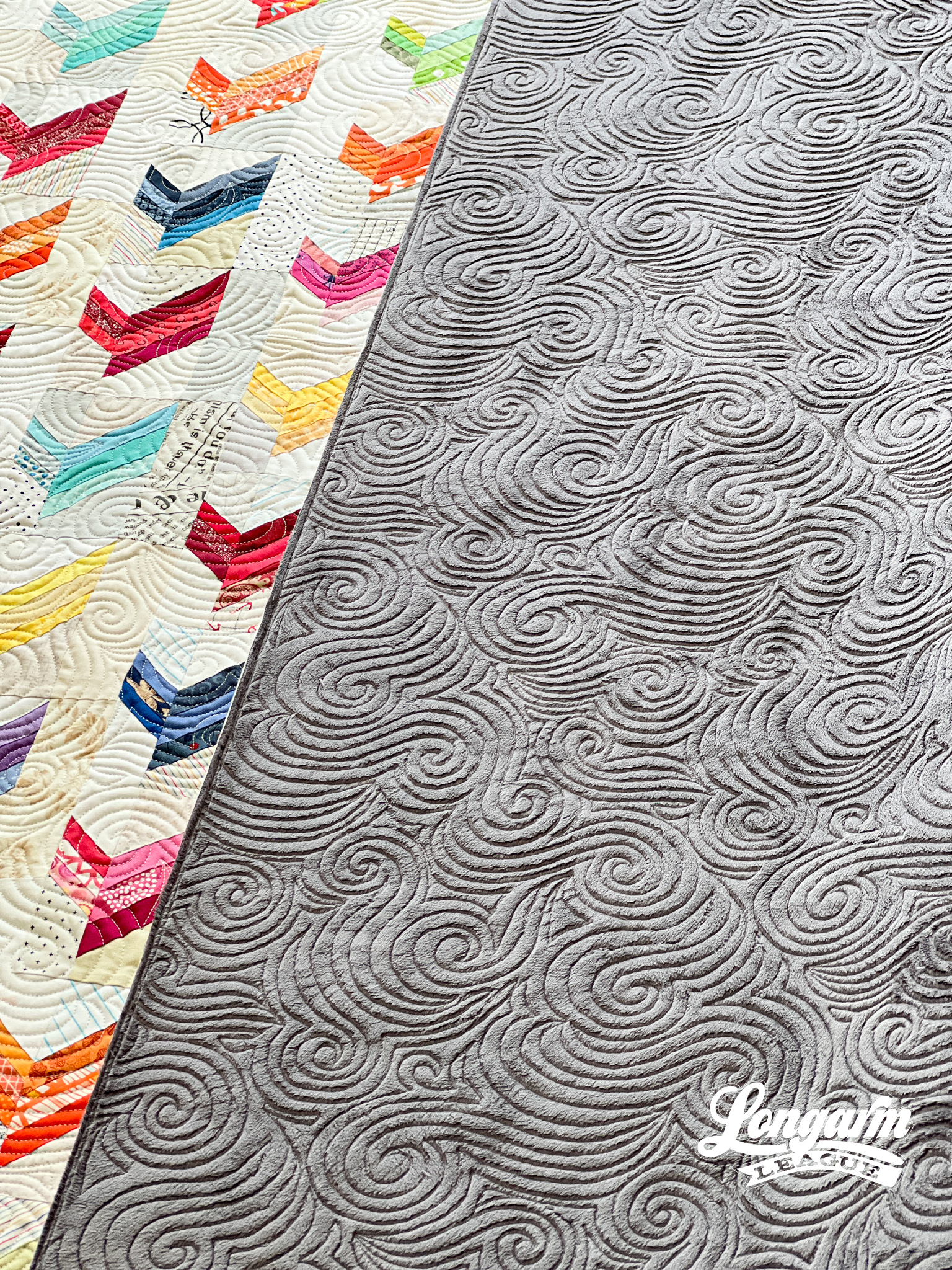
(Photo above shows Echoed Swirls. There is only a tiny bit of backtracking found in this design.)
For the last several weeks, we've been answering questions submitted anonymously in our weekly email newsletter. Here is one question we received:
"I just stepped into the computerized long arm world. Waiting for the table extension pieces to show up. However, I hear long armers say, I didn't want backtracking on this quilt. So--why are the long arm patterns created with backtracking--and why would/wouldn't you want backtracking."
If you've ever browsed our design shop and noticed the words “no backtracking” on a listing, you might have wondered the same thing! Backtracking? Is that a bad thing? Should I be worried about it?
Backtracking itself isn't so bad. It's a tool used to accomplish designs that otherwise wouldn't be possible in a continuous format, without multiple starts and stops.
I've recorded a video at the top of this blog post that walks through five different designs, showing examples with no backtracking and others that use backtracking for different reasons.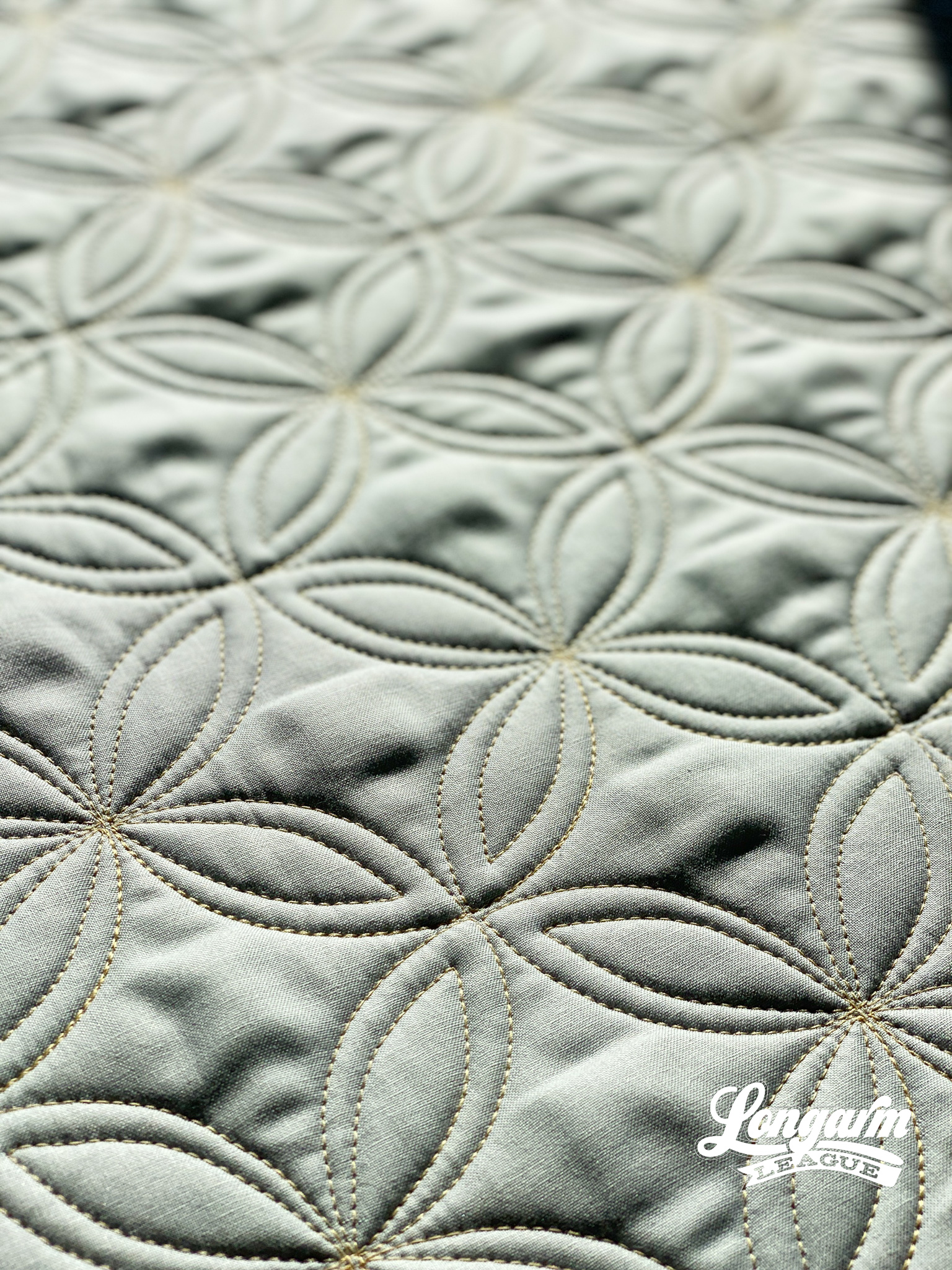
(Photo above shows Orange Dream. If you look closely, can you see the backtracked lines?)
What is backtracking?
When a digital pantograph or edge-to-edge design is digitized, every line you see is part of one continuous stitch path. The machine starts at one spot and travels through the entire design before stopping. Backtracking is when the path retraces a line that's already been stitched.
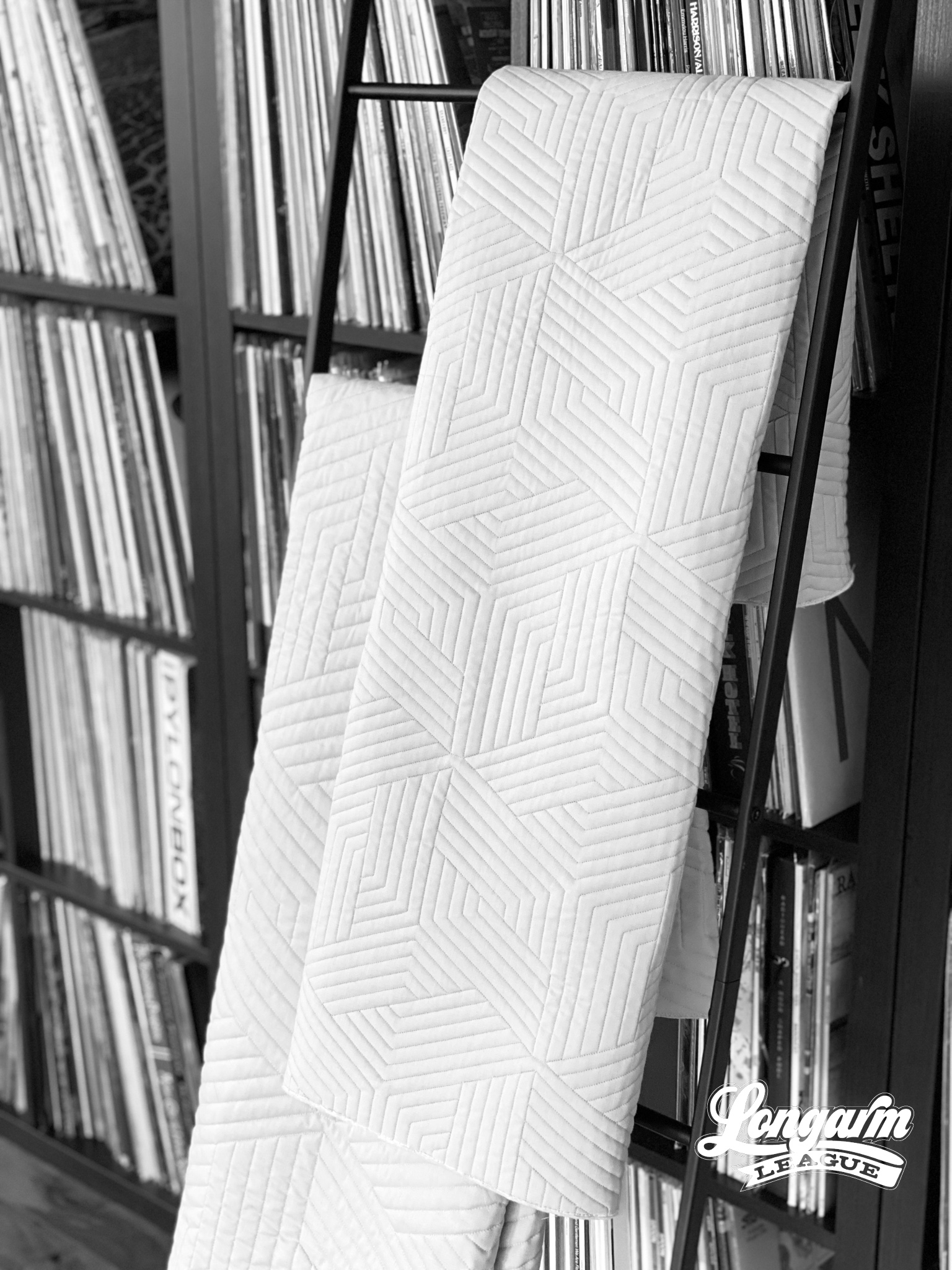
(Photo above shows Paradoxical. It wouldn't be possible without a little bit of backtracking.)
Why do we use it when digitizing?
The goal of a digital edge-to-edge design is to stitch out a design or motif cleanly from start to finish, as efficiently as possible. Backtracking is one way to accomplish this with certain designs.
- To keep the design continuous. Without backtracking, some designs would require the quilter to stop and cut threads, tie-off, or jump-stitch to transition to the next part of the motif. This would kill efficiency and would not be any fun!
- To stitch a distinct motif. Some shapes require backtracking to complete them or enclose the shape (traditional feathers come to mind). Retracing a line is often the cleaner choice.
- To travel back to the same horizontal plane as the start point. Similar to traveling around the motif as explained in the first bullet point, sometimes we need to use backtracking to travel to the same horizontal plane to keep the pattern repeats continuous.
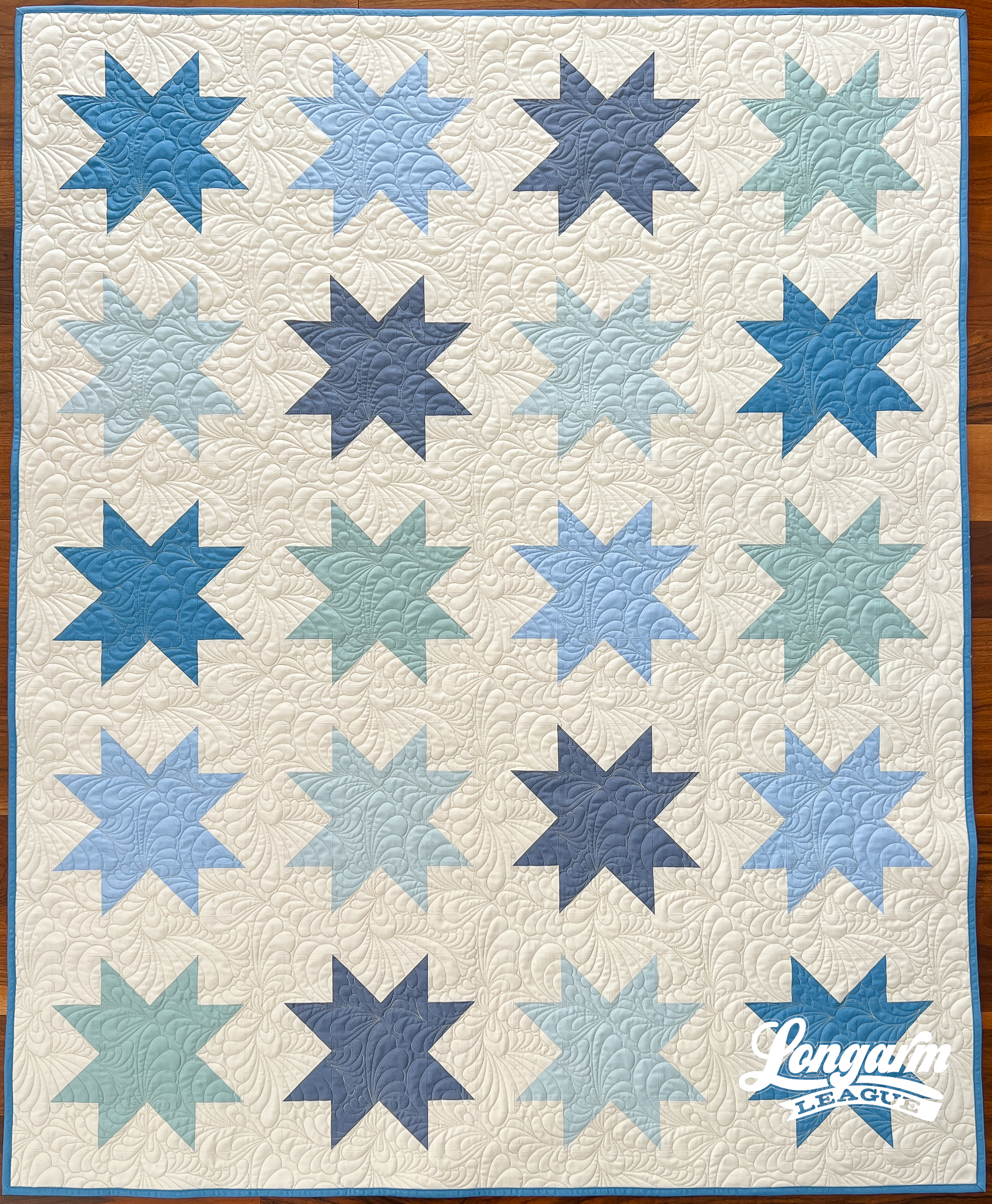
(Photo above shows Fancy Feathers, which has some backtracking.)
So why do I brag when “no backtracking” is a feature? 🤣
Okay, guilty as charged! Backtracking does come with trade-offs, and plenty of quilters prefer to avoid it when they can:
- Thread buildup. Stitching over the same line twice, especially with a high-contrast thread, can be more noticeable. It's an aesthetic thing. Personally, I like to use thinner 50-weight threads as the top thread, especially when there's backtracking in a design. I don't want the double-stitched lines to stand out.
- Imperfect retracing. Ideally, we'd want the backtracked line to be exactly on top of the first line. But in real life, the shape, the stitch path, the thread, the batting, the quilt top, etc., can all influence where the stitch path actually lands, and it may not backtrack perfectly. In some cases, it can look messy to see two lines instead of one, and that's a definite downside.
- A little more thread and time. Heavily backtracked designs use more thread and can take a bit longer to stitch out.
- Line confusion when restarting. If you run out of bobbin or a thread breaks and you need to restart, doing so in a section of a design with backtracking can cause confusion. Does your stitch path need to restart on the first or second time in that area? (Hint: When possible, I'll unpick stitches beyond where it needs to be restarted in order to avoid restarting in a section with backtracking.)
A “no backtracking” design sidesteps all of that. You get clean, single lines, less buildup, and often a faster, more forgiving stitch-out. That's why we call it out on each design's shop listing. 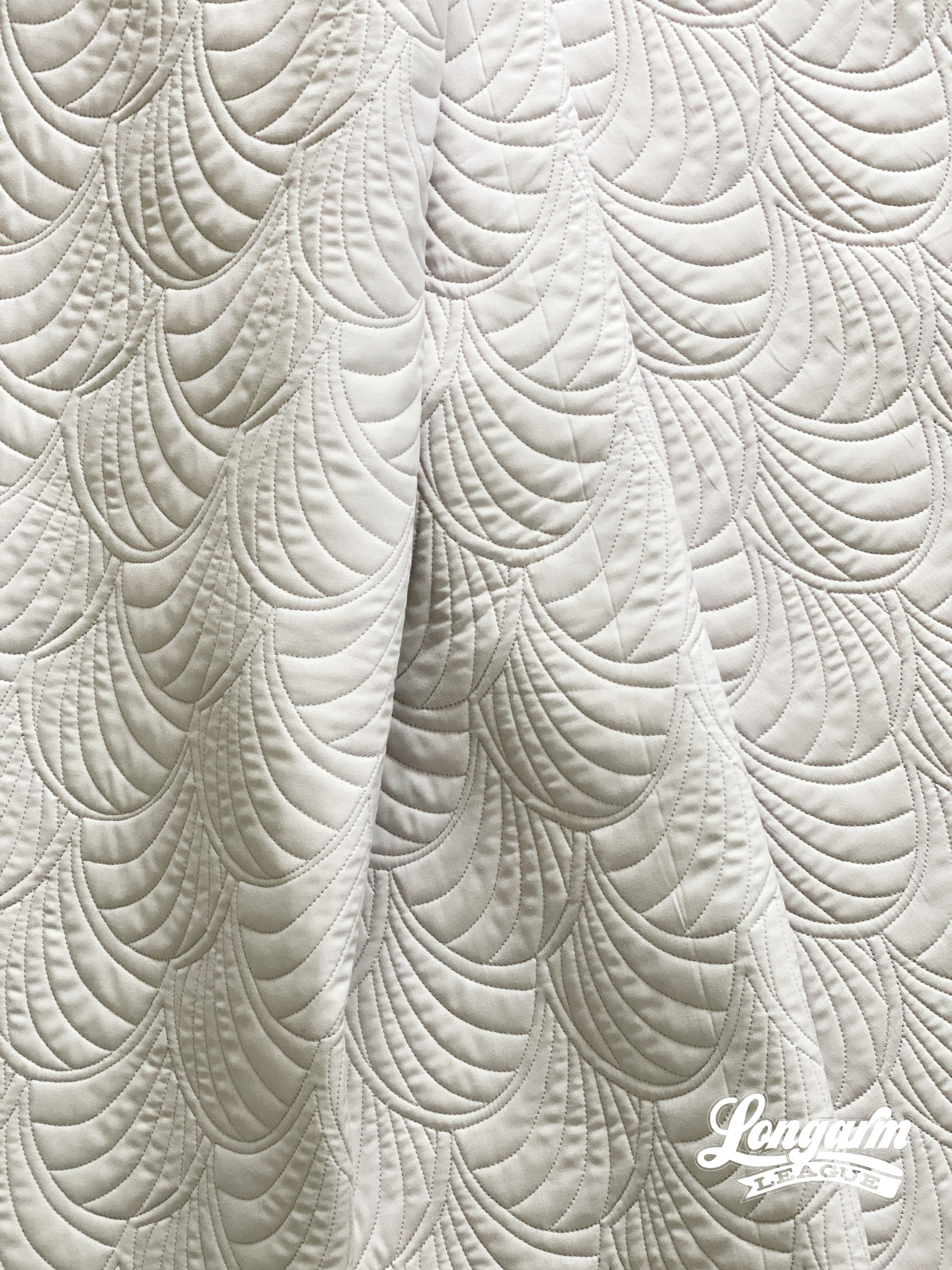
(Photo above shows Behold. This is one of the designs I walk through in the video at the top of this blog post.)
Where can I find backtracking info for Longarm League designs?
You can browse our full collection over at the digital design shop. 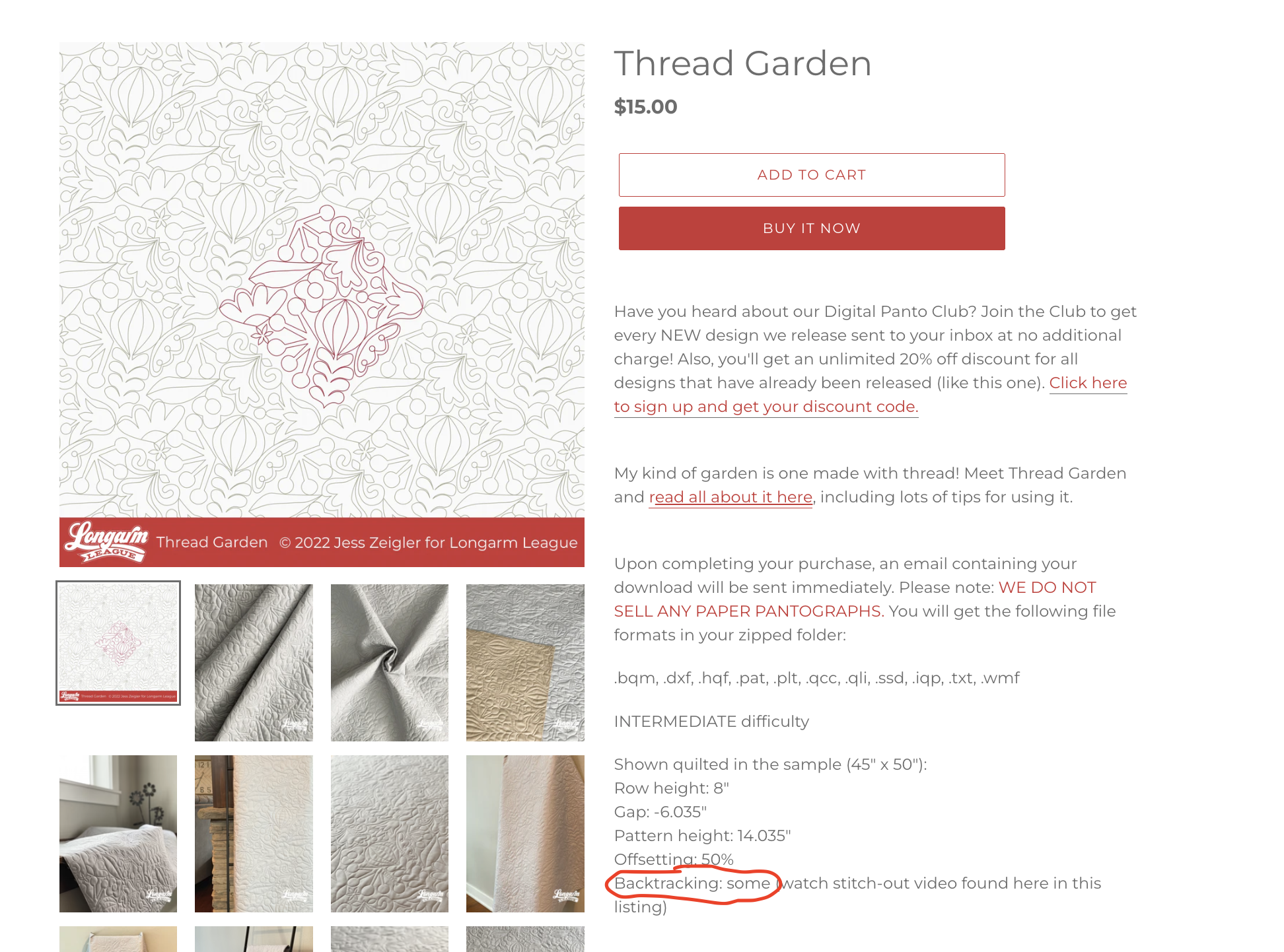
(Photo above shows a screenshot of our online shop. I've circled the part about backtracking.)
- Each design's shop listing will have information about backtracking.
- Each design we release includes a PDF in the files you receive, in addition to the format files your software uses to stitch the design.
- We write blog posts for each design to let you know what to expect from each stitch-out experience. Since you're already here on the blog, feel free to scroll through the posts or use the search bar to find a specific design.
The takeaway
Backtracking isn't something to fear, and it isn't a flaw either. Plenty of gorgeous, intricate designs are simply not possible without it. As a designer, I avoid heavy backtracking whenever possible and try to think of ways to change the design itself or sequence it to minimize backtracking.
Knowing it's there just helps you make intentional choices.
Transcript of the video:
Hi, this is Jess with Longarm League, and we received an excellent question about what backtracking is and how it's used and why it's used in digital designs. So I'm going to take you through a number of my designs and show you some non examples and then show you some examples with more and more backtracking. So I hope this helps you know what to look for when you are deciding what kinds of designs that you want to use.
Or maybe a client has just said, would you please use this? It's a good thing to understand what backtracking is. I always, in my PDFs and in the shop where my designs are, I always tell you if there is backtracking, either it will say none, minimal, or some. And I'm hoping to go through some of the examples with you to make that a little bit more clear. So the first one is kind of a non example, but I think it's helpful because it's so simple and it will show you some of the rules that we work with in digital designing.
And I'll use the word pantograph and digital design pretty much interchangeably. Sometimes people associate paper with pantograph, but pantograph is really any continuous line design. And they can be digital pantographs, which are basically the same as edge to edge designs. Okay. So the rule is that it has to start and end on the same horizontal plane. So I'm going to play the stitch path of this and you'll see it makes the loop up and it descends and makes another loop and then it ends on the same horizontal plane as where it started.
And then your software is going to automatically tile that design across, up and down based on the parameters you give it. But I wanted to show here that crossing over the line in, in each case is not considered backtracking. Backtracking is where you're going to go intentionally over a line that you have already stitched in a way to like disguise that line or to not make it part of the design element or to help travel to a point where you can then start again.
So that's wishbone. Next I'm going to go to feathered spirals. I'll pan out a little bit to see how this looks on a quilt. This is a single motif of feathered spirals. And this is another non example. But I wanted to show you that instead of backtracking, I'm using echoed lines or sort of following the path, but just above the last stitch line in an effort to move around the design to fill the Space.
I feel like it also adds a design element. Your. Your echoed lines are texturally sort of interesting and serves a dual purpose of moving around the design and kind of setting those plates looms apart. So I'm going to kind of speed through the rest of this. Each stitch is setting its own path, so to speak. You're not going over any of your previously stitched lines with this design.
It's another non example, but I thought it would be easy to see. Okay, so we again are starting and stopping on the same horizontal plane, and no lines were repeated. Okay, now I'm going to go to Echoed Swirls, which is it uses just a bit of backtracking and not much. And it was pretty much as a way to fill in the space without complicating the lines even more.
Knowing that it is kind of a complicated design, that's kind of a funny thing. Like, I didn't want to complicate it too much more, but I'll get kind of speed up to the areas. So far, we're forging new ground each stitch we take. There's no backtracking yet. But then you'll see coming up here soon, there's a small space that I want to navigate down into right here. And in order to not make that line overlap itself, I am backtracking right here so that it doesn't.
It gives it kind of a dimensional look and it doesn't complicate it by, you know, crossing over the lines of the other swirl. So there's another instance right here. It's a very narrow space, so I'm working my way back so that it's a little bit more clean. And I'm also able to navigate to a new part of the design to fill in that space. There's another part coming up here where again, I'm filling a very small space.
So I'm going to use the line that I already stitched to help me travel to a new place to put some of those lines down to fulfill or to complete the motif. And then I'm working my way to the end point, in which case the next motif would start. Okay, so that's using backtracking, but very minimally and basically to disguise the line and to make this look like a little bit more dimensional.
Like this one is on top of this swirl is on top, and that kind of makes this area recede to the background. Not much backtracking. Nothing much to worry about here. Now I'm going to go to behold. So behold has these clam type shapes but part of the design, part of the texture, part of the interest here is the, the lines that are coming, you know, kind of sweep, sweeping in this direction and then the bottom one sweeps in the other direction, kind of giving it some contrast.
The lines are an important part of the design of this. And with each, with each sort of section enclosed, it gives the clam shapes, it makes the clamshell shapes stand out more because those ends are completed. So let's go through this. There's quite a lot of backtracking here, but I want to show you that when a line. Okay, so we have backtracking immediately, so we're going up to the start and then we're going back over the line immediately to travel to a new part of the design.
When backtracking is immediate like that, there is less of a chance to be off in your stitching because, you know, the batting or the thread pile up. Or sometimes when you're moving around to a design and have the backtracking happen later, there's more variables, I guess, to be off in that backtracking. So I find that when a line pivots and backtracks almost immediately like that, it's more clean like you will get.
You'll have a better chance of, of hitting that previously stitched line pretty dead on almost every time. So that feels like a low risk kind of backtracking. You'll see here I'm complete or filling the spaces, completing the shapes on the bottom edge. But then in an effort to move back up to the start, you'll see me backtrack over the top lines right here to sort of enclose and complete that clam or teardrop type shape.
So in this case, the backtracking is very much part of the design. It helps me travel around, but it also is isolating those shapes or completing those shapes so that the lines are part of this larger teardrop or clam type shape. Okay, and then the last one we're going to look at today is Orange Dream. And this is just a variation on an orange peel design that are know, very common in quilting.
Here's what it looks like as a whole, but we'll zero in to just the one repeat. So I'm going to assign the stitches to this so we can see how this one moves. I tried to backtrack on this one pretty early on, so you'll see that's already going back over itself. And that helps keep things aligned in the software with your robotics. So there's not much wiggling around or movement or fabric draw.
When designs are dense, especially the thicker the batting, the more fabric drag can happen, and your quilting actually shrinks up the quilt as you go. But when you're double stitching or backtracking on a design so early on in the sequence, again, you'll have a minimal chance of being so super off in your backtracking to where it looks messy. So here is the backtracking coming up here to finish the design and to help me travel again to the start or the same horizontal plane as the start.
So we started over here, we did the whole motif, and then we ended up up here. One way to work around this would have been to make a straight line from that point to this point. But I think that kind of defeats the purpose of the orange peel look. There are some designs that do have the line in them, and those are fine. I just. With this one, I wanted to make it look as traditional as possible, like an orange peel.
So I wanted to backtrack those lines so that it was cleaner and that I could move to the next shape and still have this area of interest here, where it's like the petal or the peel is echoed on the inside. So those are a number of different examples showing no backtracking to a little more backtracking, showing some of the functions that backtracking has. So the. The more, you know, the more empowered you are to make those decisions when it comes to your clients quilts.
And I hope you learned something. Thank you.

Jess Zeigler
Longarm League Commish & Owner of Threaded Quilting Studio, LLC.


