
Laverne and Shirley Digital Pantograph Designs
Meet Laverne...
and Shirley!

One's straight-laced, one's a little more adventurous. They are similar feather designs with different spines. If not sister designs, AT LEAST coworker/roommate designs. 😊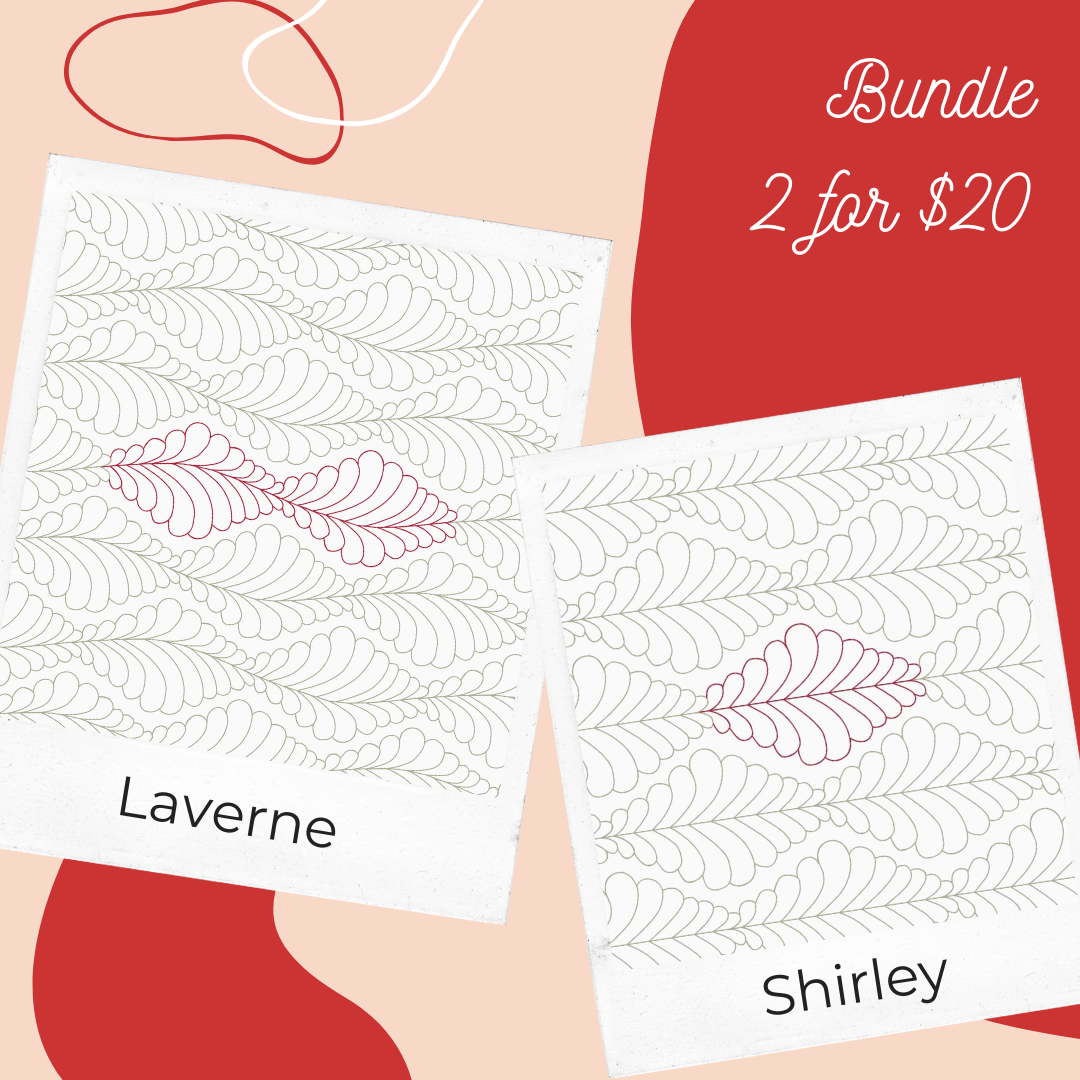
Even though it's a challenge to say Shirley and Laverne in that order, Shirley is where I want to start because that is the order of design conception.
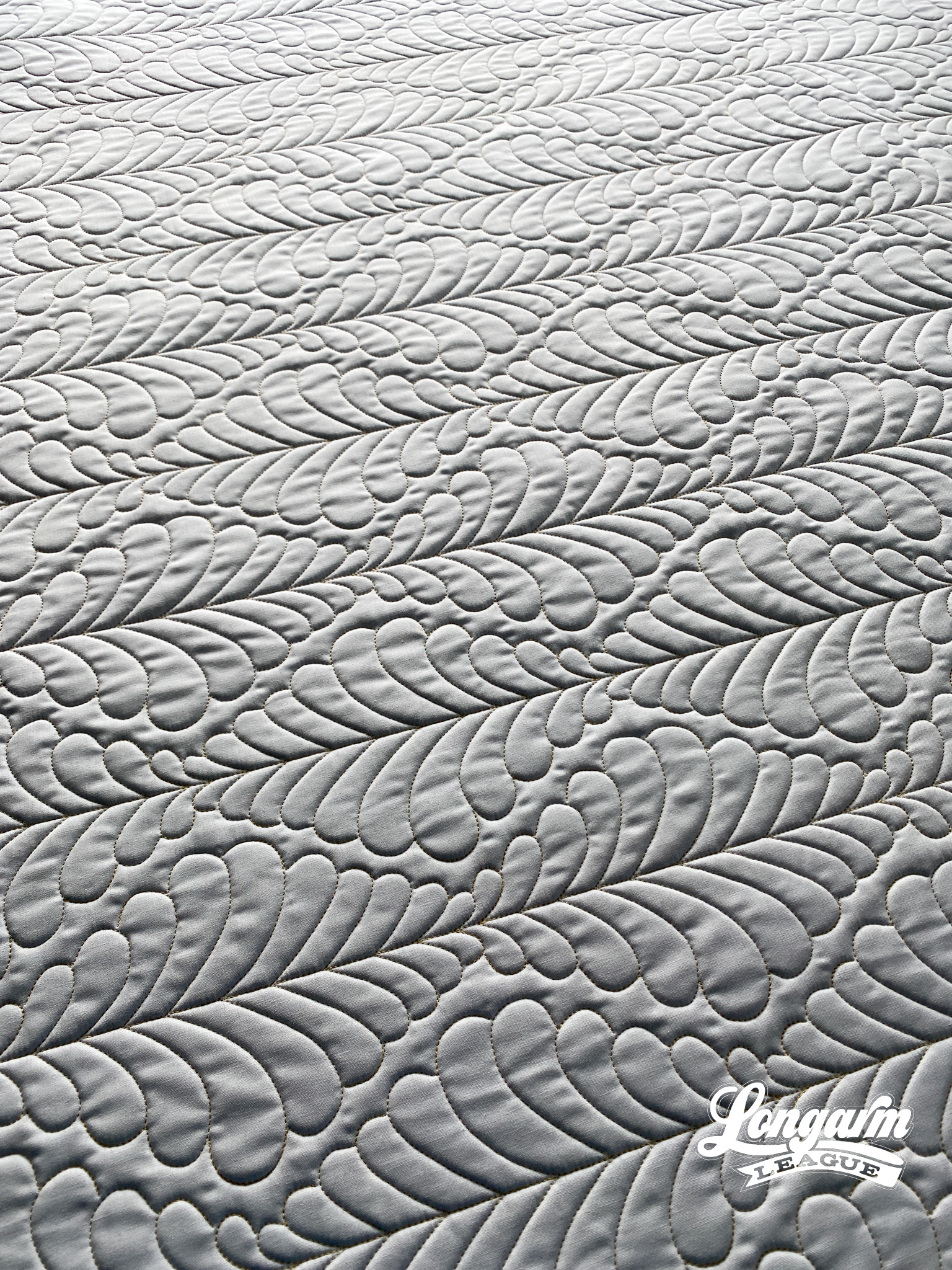
I liked the idea of the feathers nesting and interlocking within peaks and valleys of each row.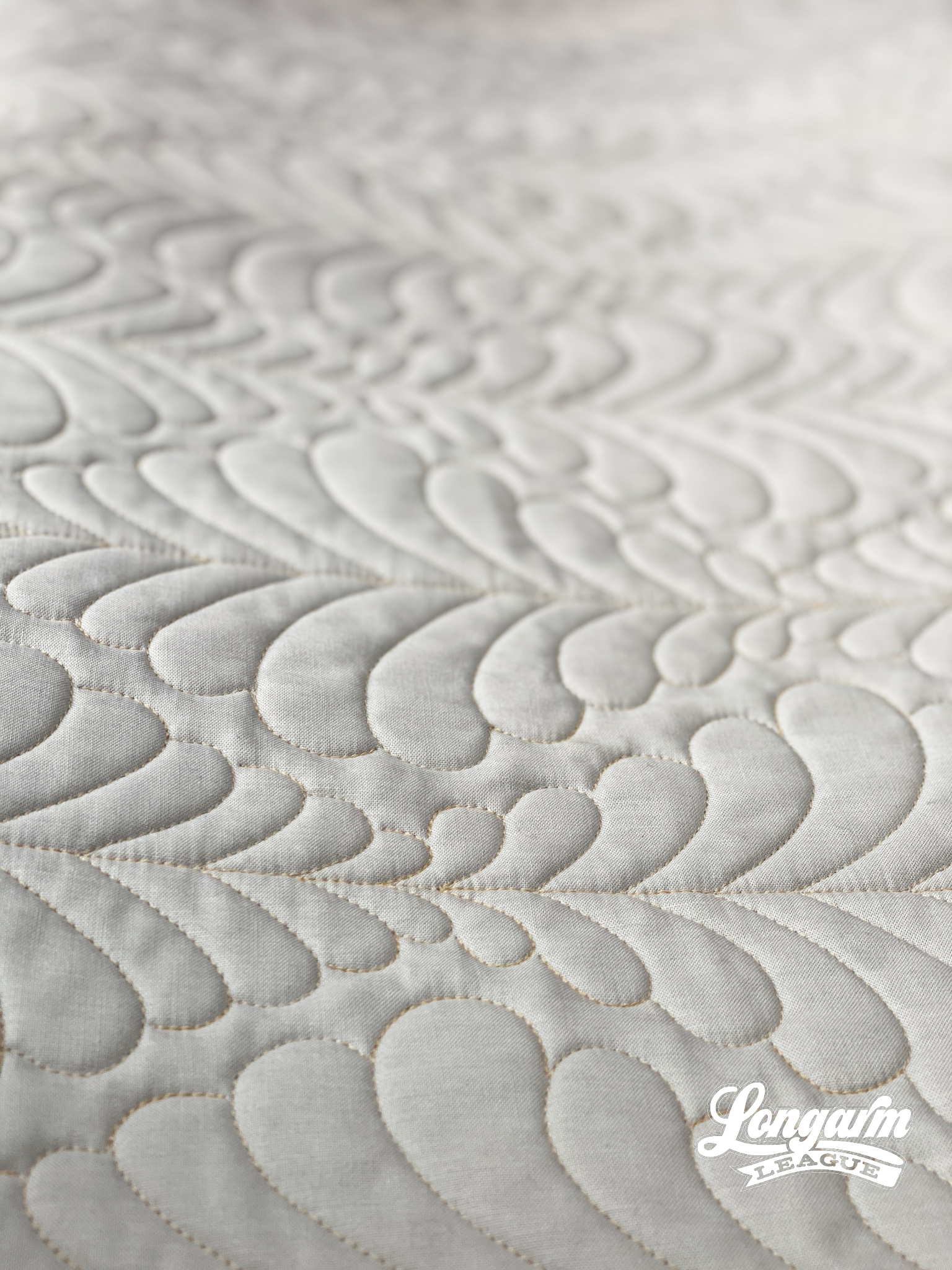
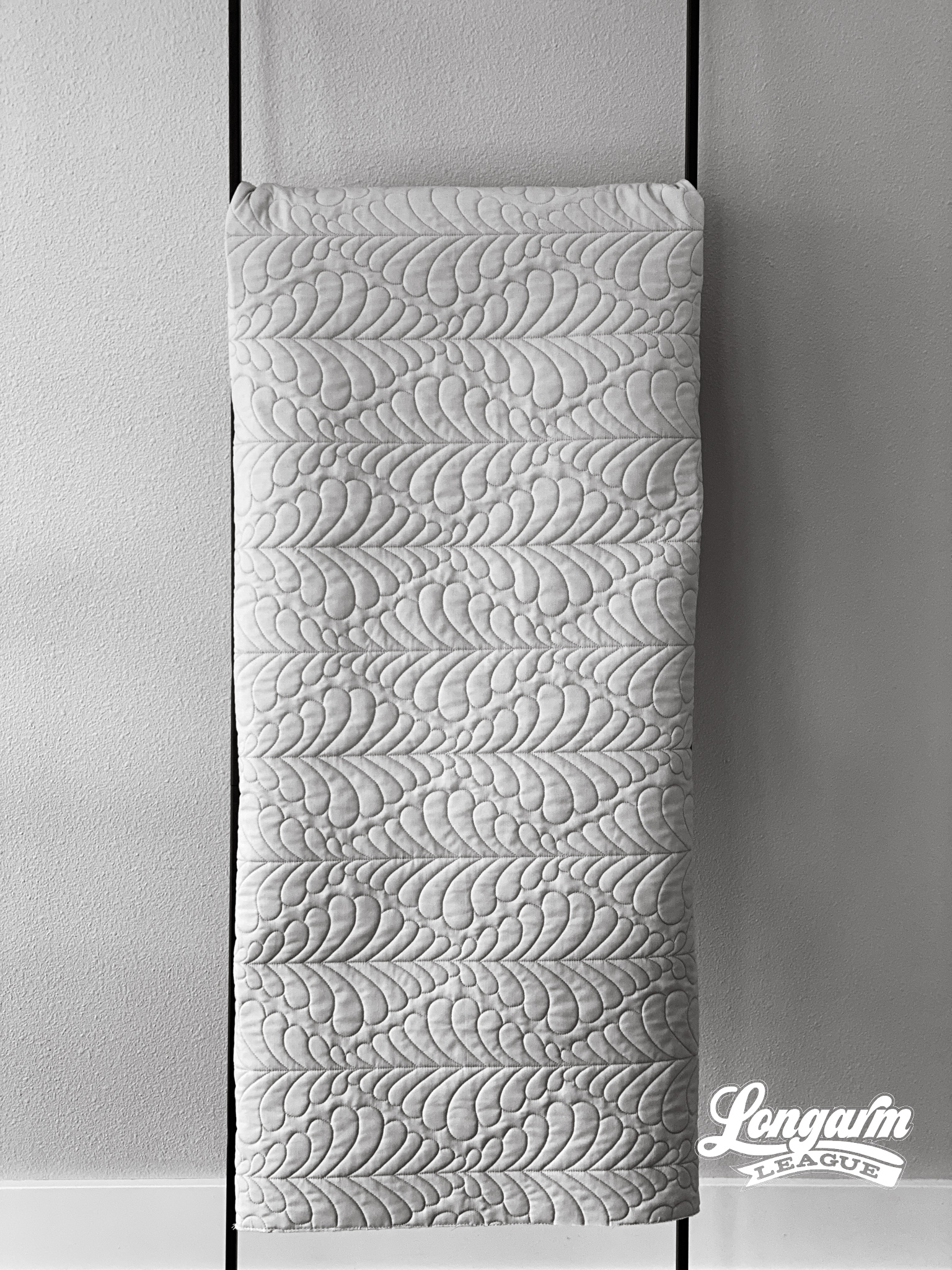
As with any design, I try to use backtracking or over-stitching as little as possible. When I would free-motion quilt, I made my feather bumps in the same fashion, but with the computer, I can "build my spine" incrementally as I progress from left to right.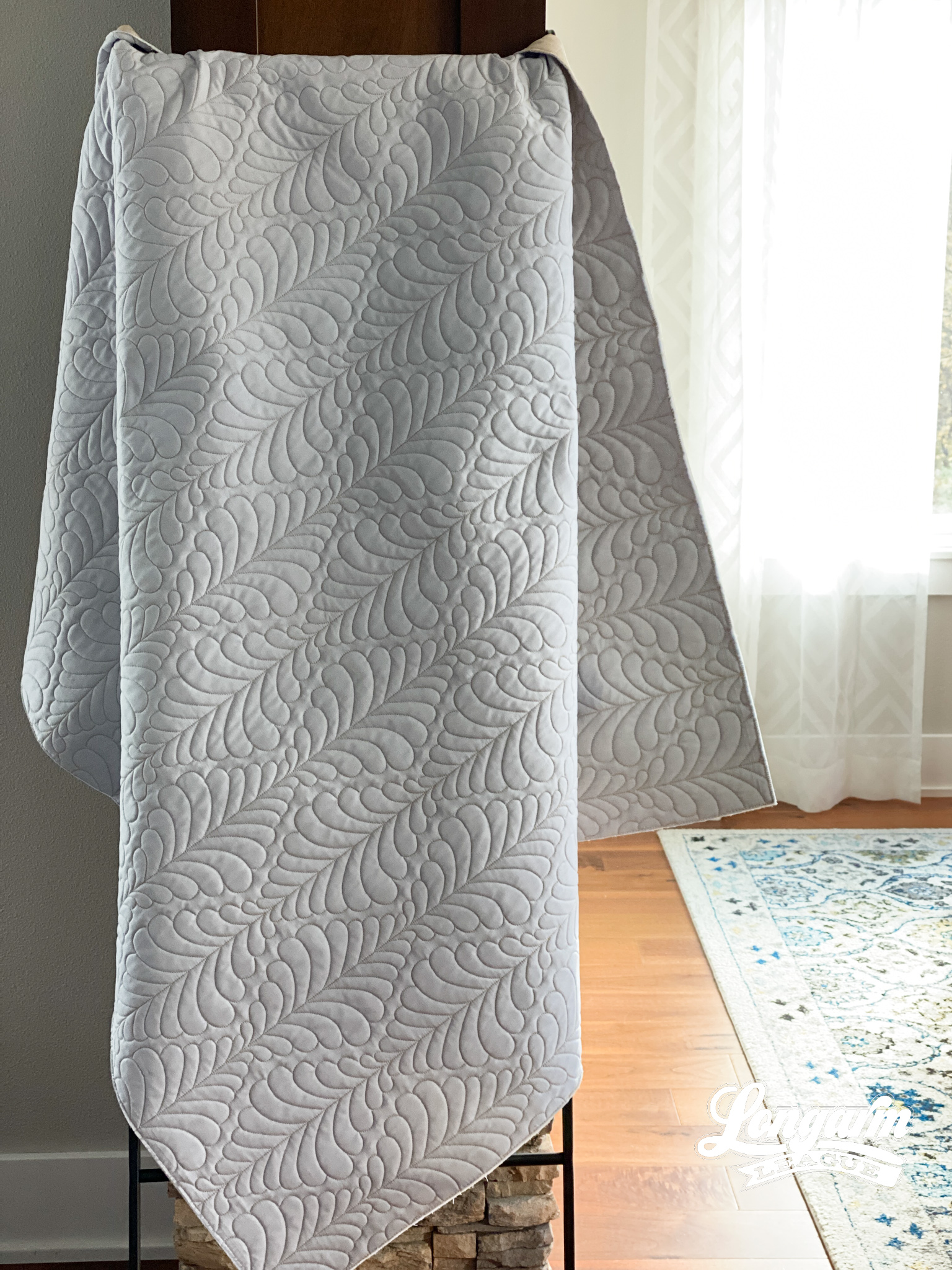
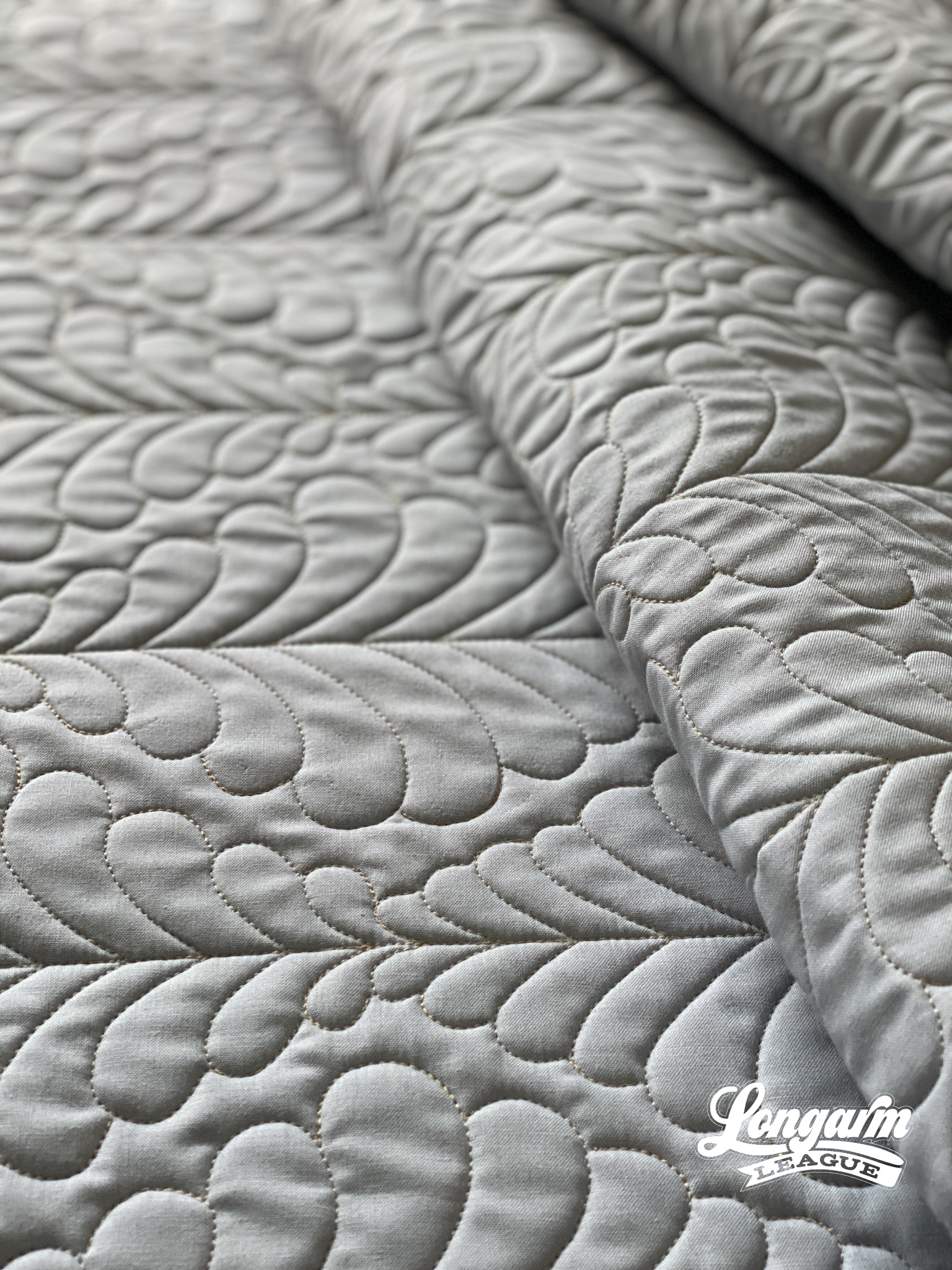
Even though the designs look very similar, they are set up differently.
The Shirley design is made up of one feather motif that repeats and the Laverne design is made of a couplet that repeats: an upstream and downstream spine. See more pictures of the Laverne design to...
Featherweight Digital Quilting Design

I love feathers.
I took my first quilting class in 2005. Not a piecing class, an honest-to-goodness beginner's machine quilting class that taught things like which materials to use, how to baste, and how to {start to} free-motion quilt.

In that class, we saw examples of real-life quilts that had been quilted. Our instructor passed around even more books of incredibly inspiring quilting. I fell for hard for feathers right then and there!
This was also the class where I heard ladies talking about long arms and I just nodded along, not having any idea about what that could be referring to. 😂


Basically, I've loved feathers ever since, in all kinds of iterations. I practiced drawing and quilting them until I got it down pat. I started out being truly the worst at it! It's not a natural thing—knowing how to create feathery shapes. Thank goodness for books and (much later) YouTube! 

As for this design, I wanted to make minimalistic-looking, plump feathers that are easy to ...
Yacht Rock Digital Quilting Design
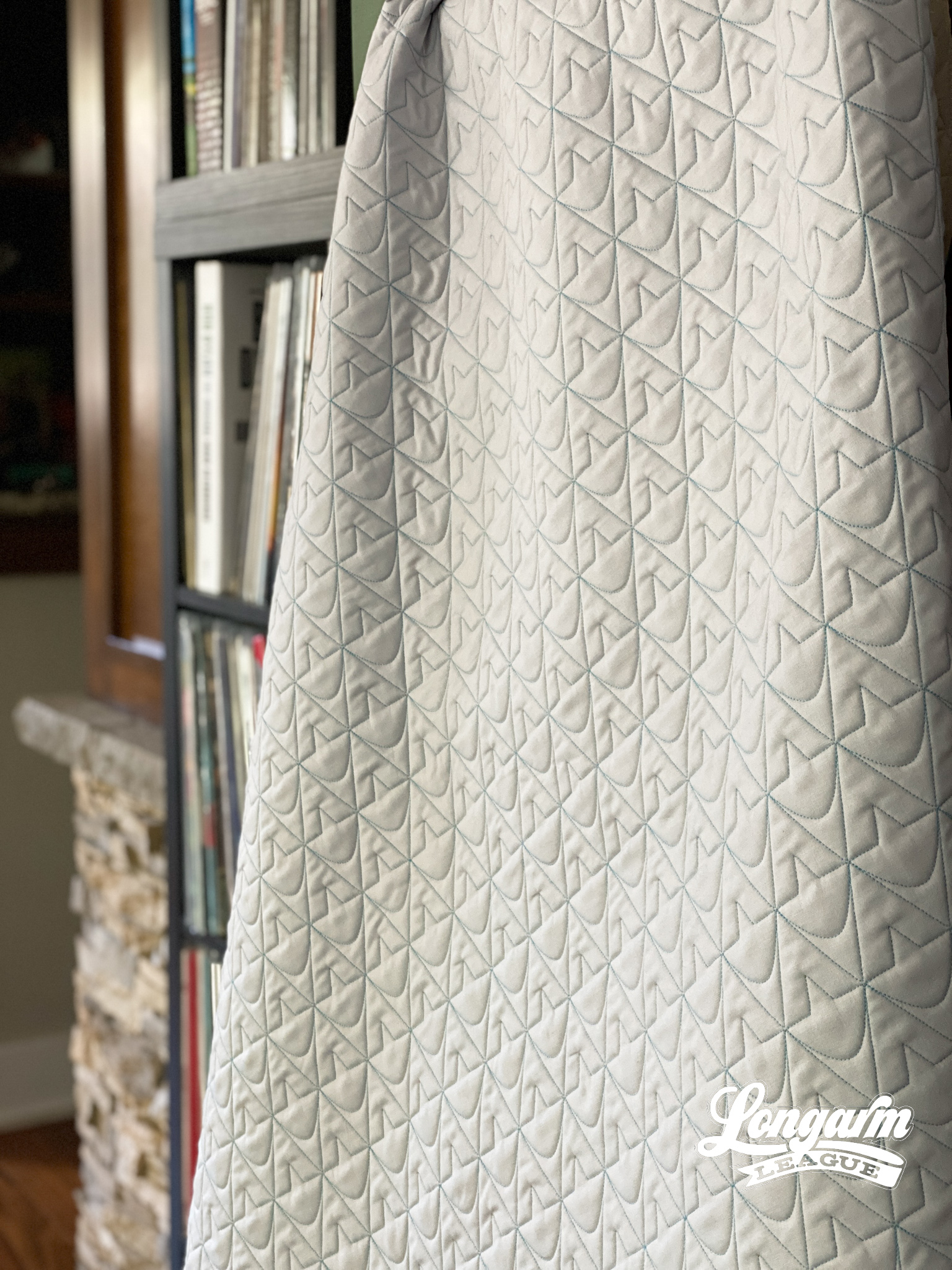
I have to be honest and say I wasn't very excited about this design until I stitched it out. The moment I did, I was smitten by the texture! In fact, this sample has remained "staged" around my home well after the pictures were taken and it continually catches my eye!
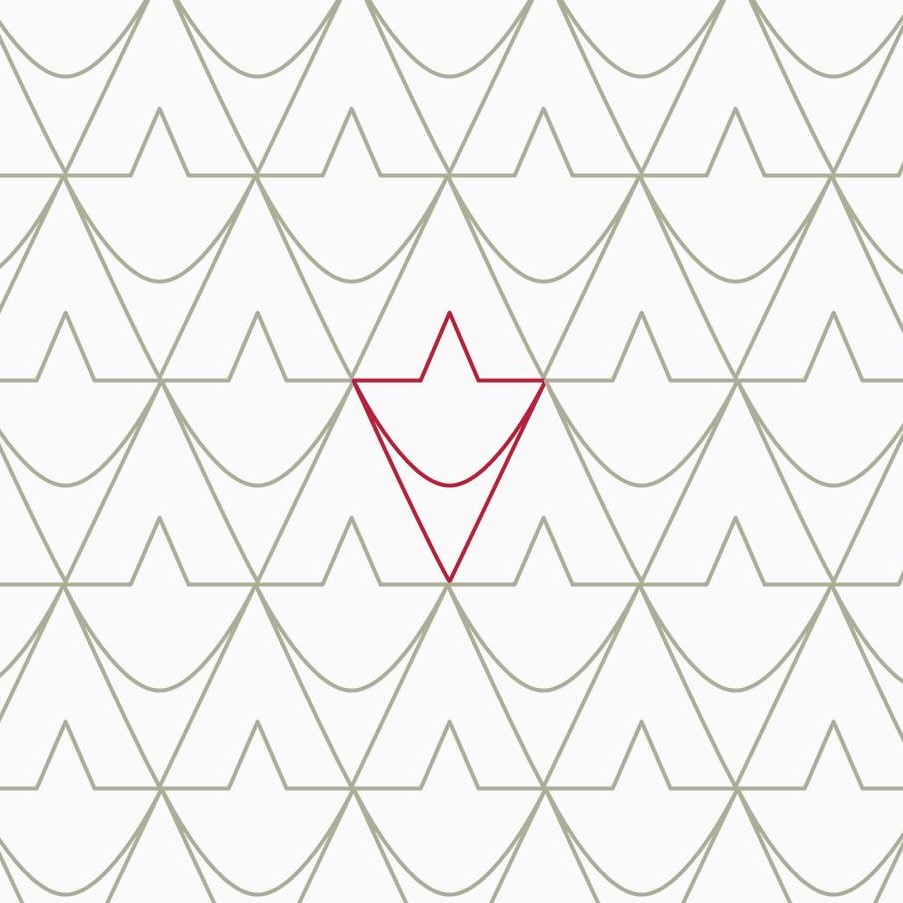
When I was designing it, I had a draft of the shape saved as Keyed in the computer... because the one repeat looked like a type of a key? I'm never sure how these things take hold, I just knew it needed a new name. Naming is hard! I want a name that is unique so that it won't be confused with other pantographs on the market and it's always nice if there's an element of the design that ties to the name in some kind of way.
I asked Josh for naming suggestions and he thought that the design looked like a little sailboat which made him say "Yacht Rock". And obviously, that had my interest right away.
Yacht Rock is a hard-to-define genre of music, although the Wikipedia entry here will help paint a picture.
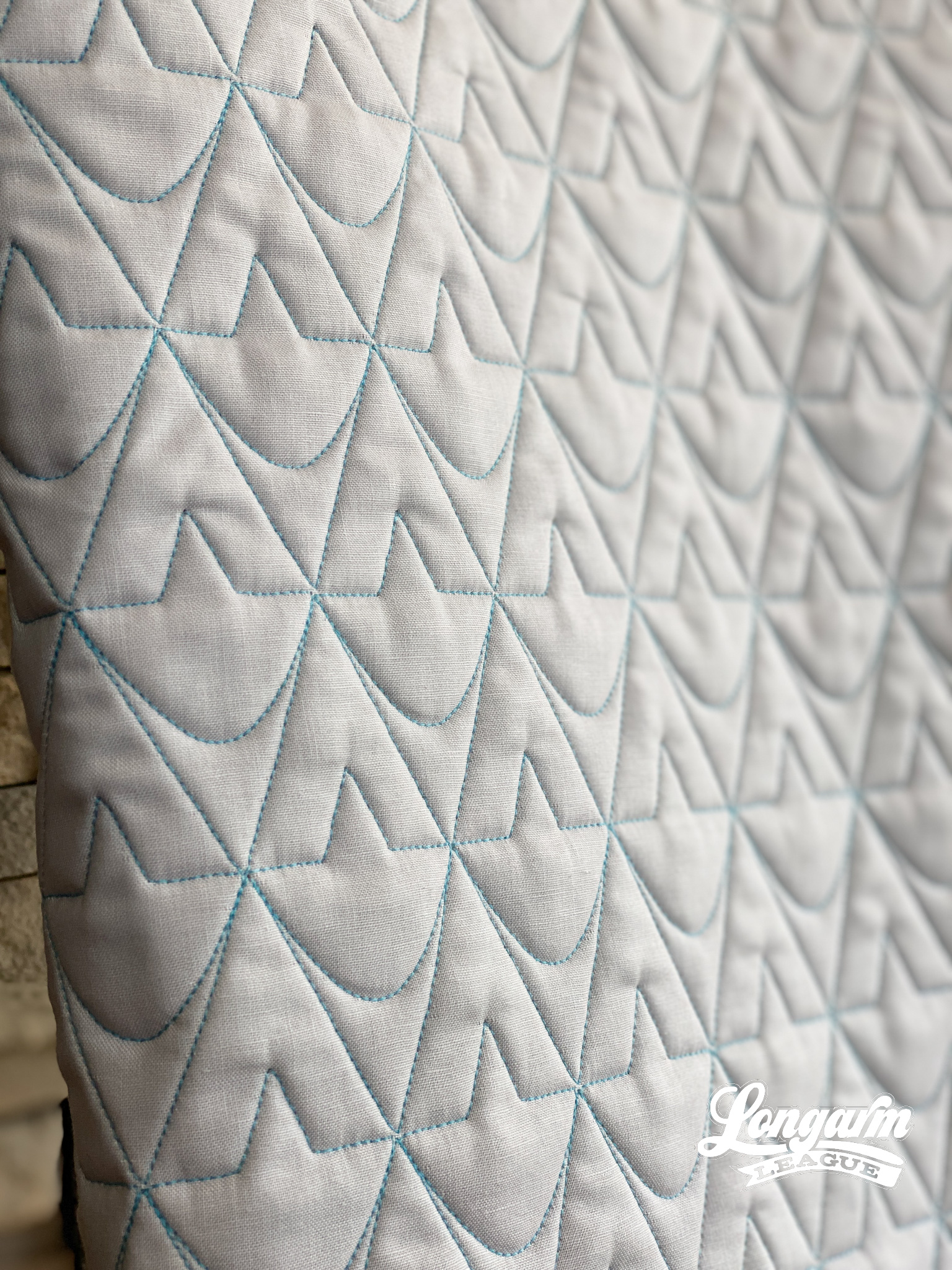
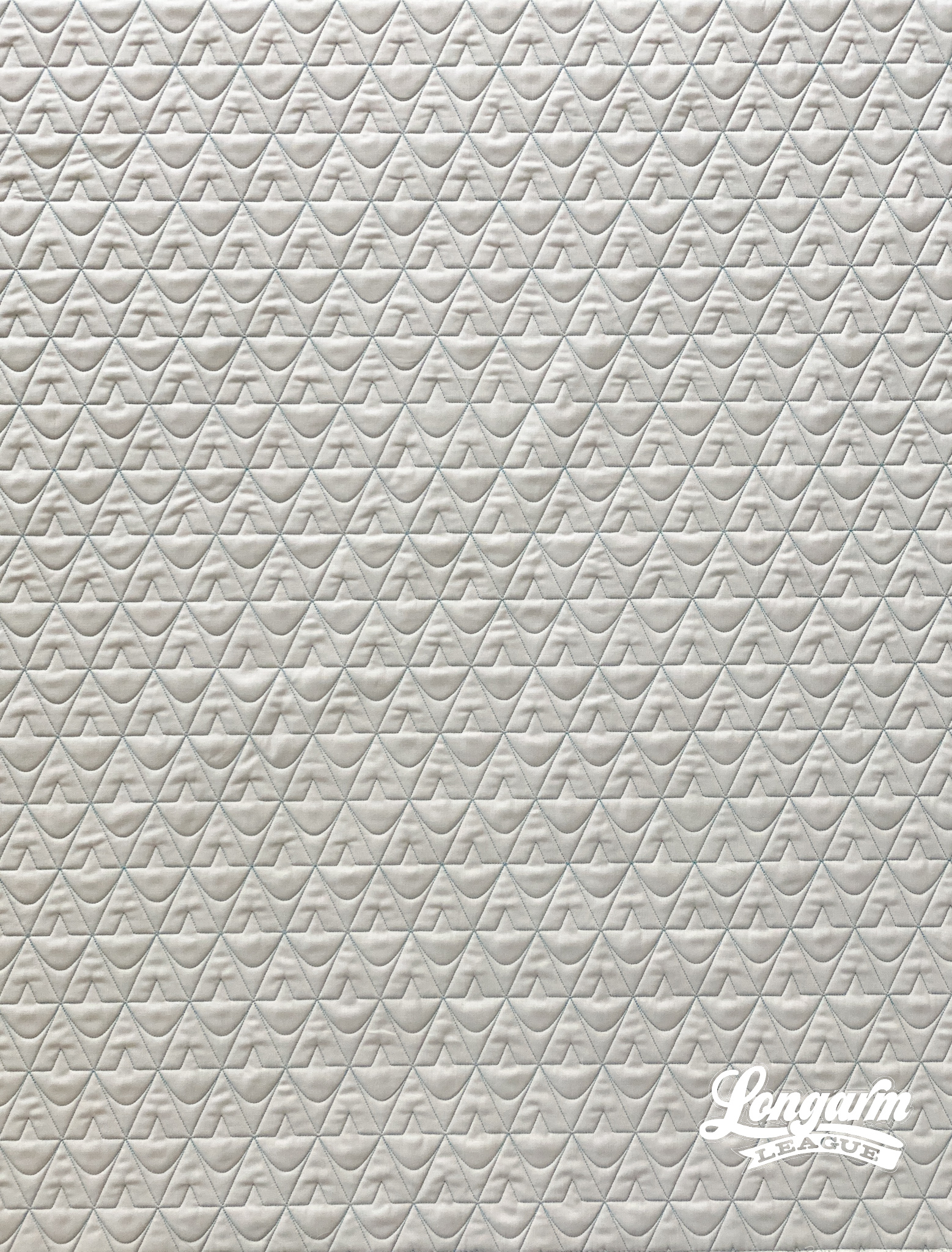
Th...
Leafy Bloom Digital Quilting Design
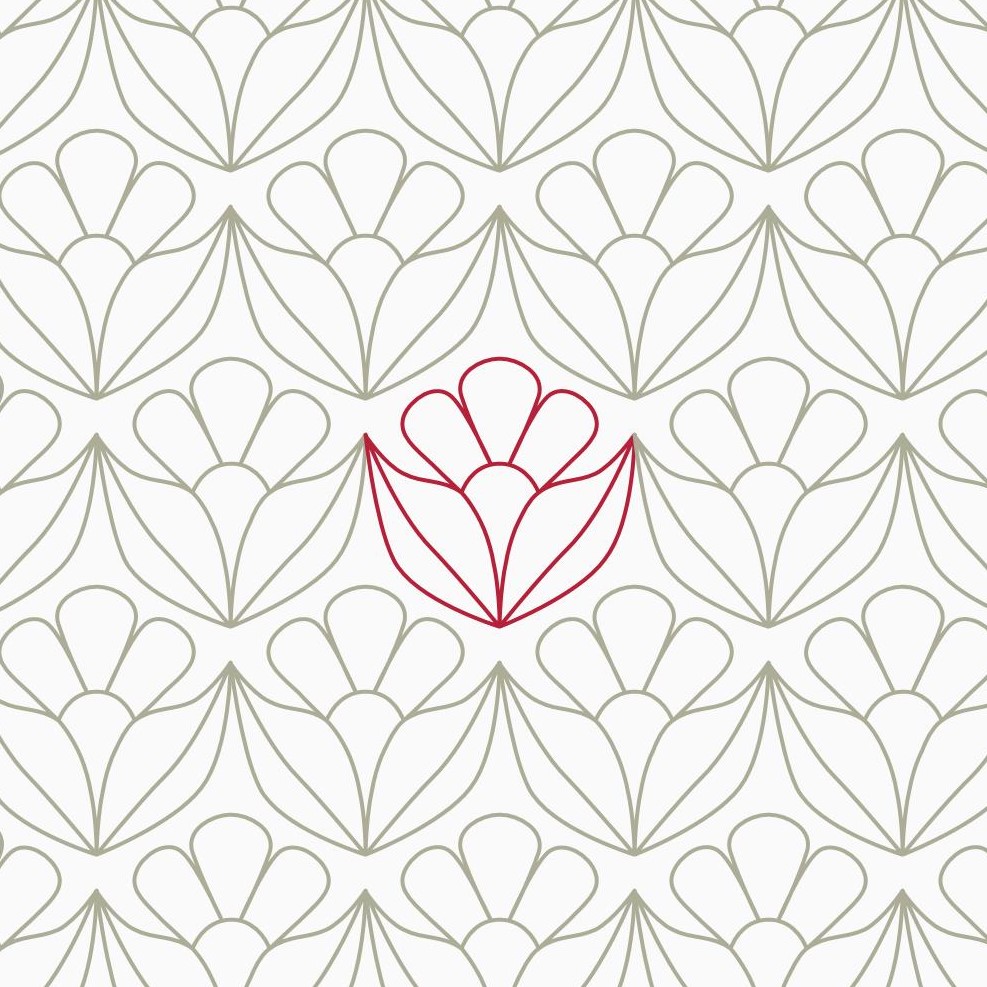
For this new design, I wanted to explore a geometric and simplified version of a flower. In general, I'm not into flowers or gardening, so I really have no idea if it looks like anything existing in nature. Also, please don't hold that against me! It feels like I'm violating a sacred quilter's code or something. Quilting and gardening seem to go hand in hand.
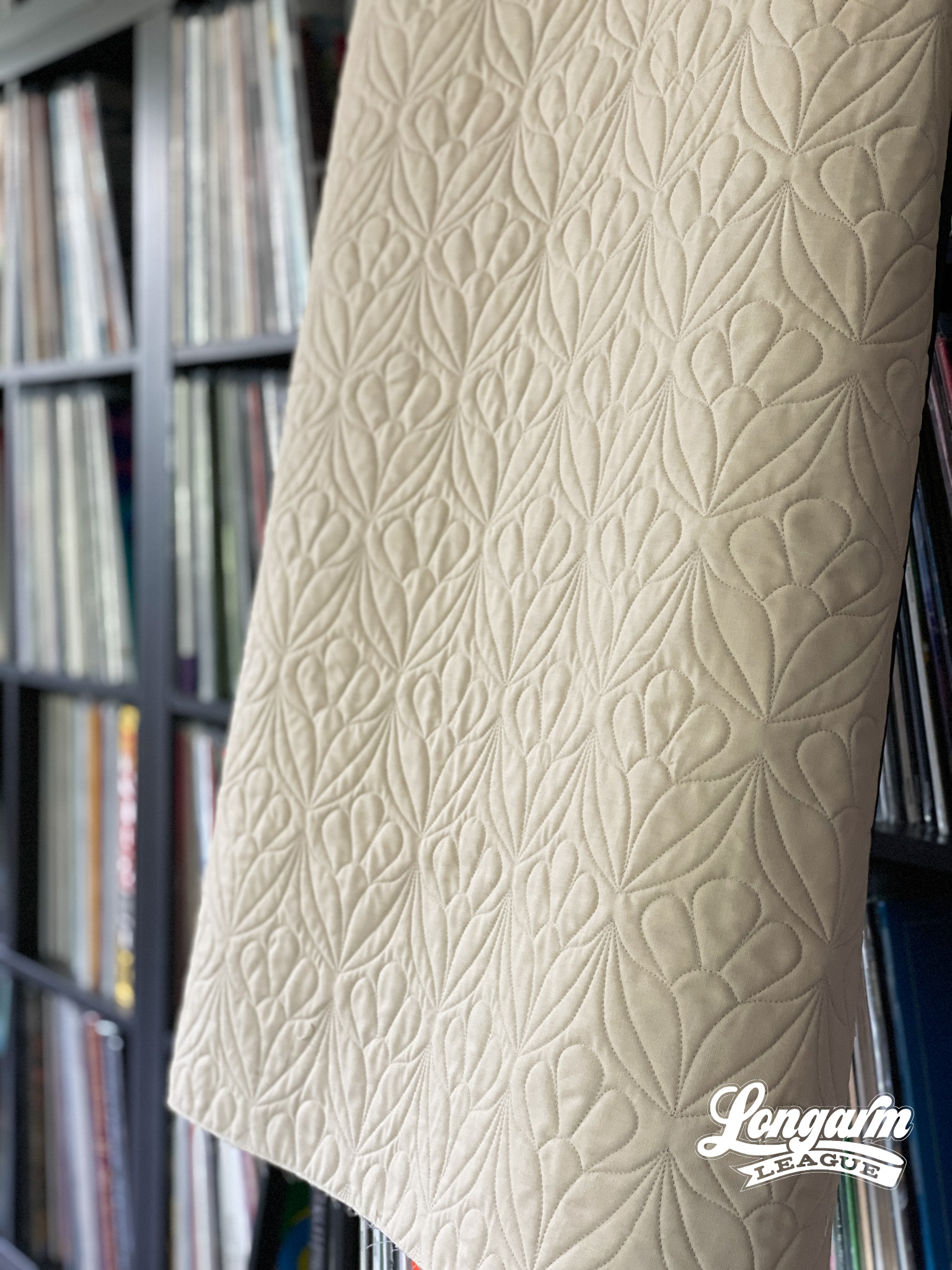
What I do really like, however, are simple repeatable shapes. I like the way the texture can recede into the background and be present, even when it doesn't have to be the star of the show.
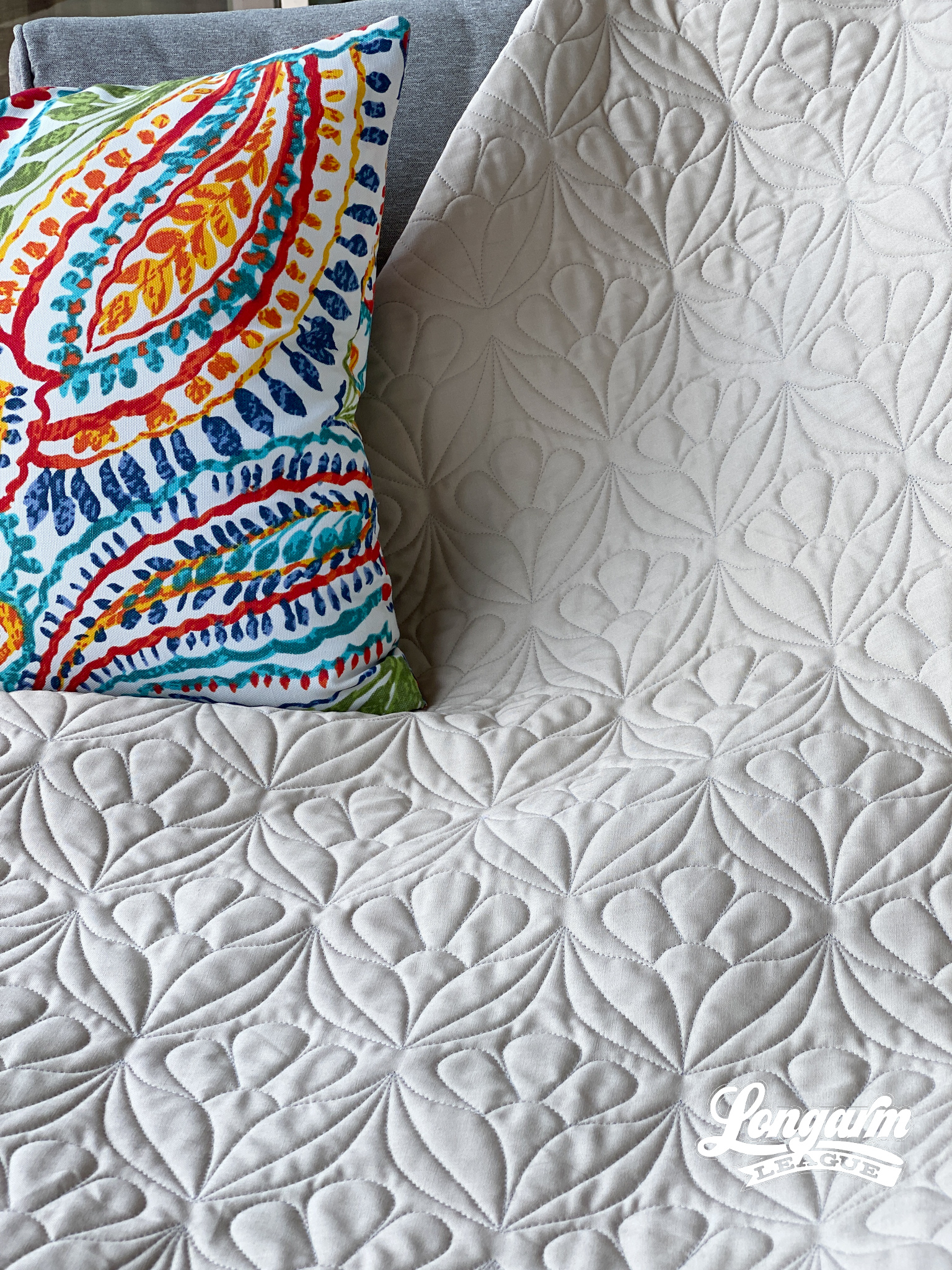
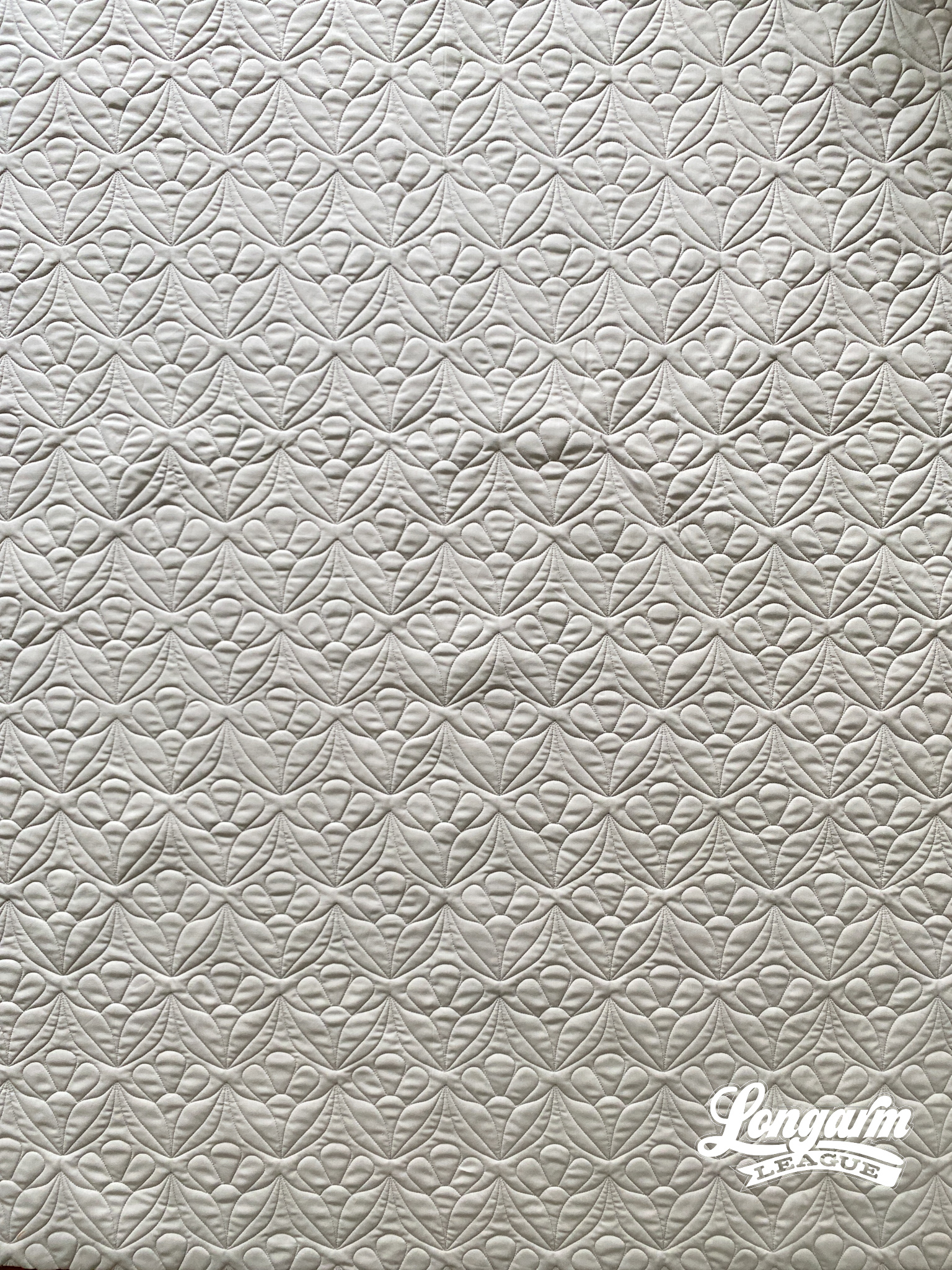
Another thing I try to watch for as a designer is that the quilting is evenly spaced, giving a nice uniform texture to an edge-to-edge design. It's the little things like this that make me happy! 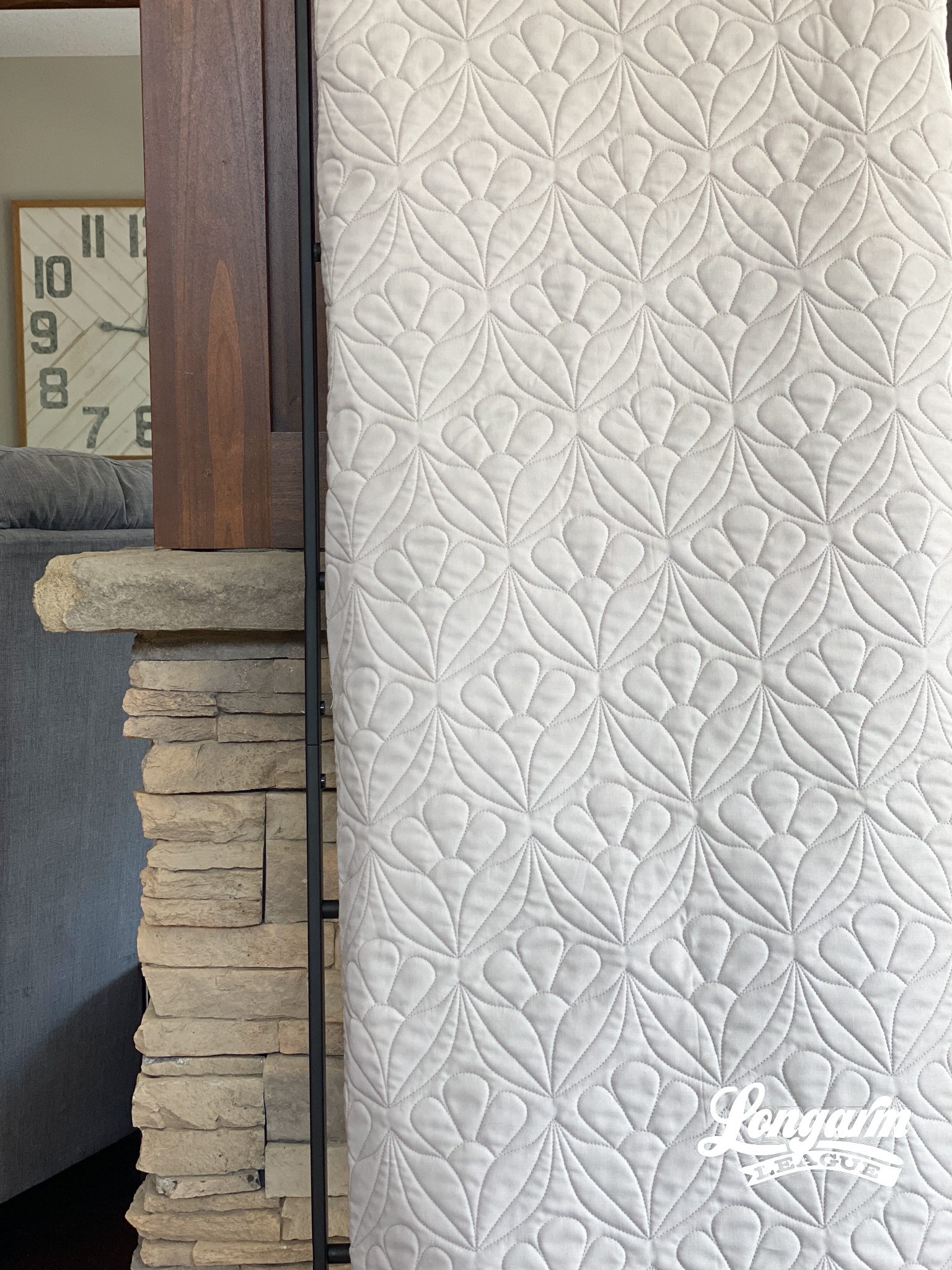
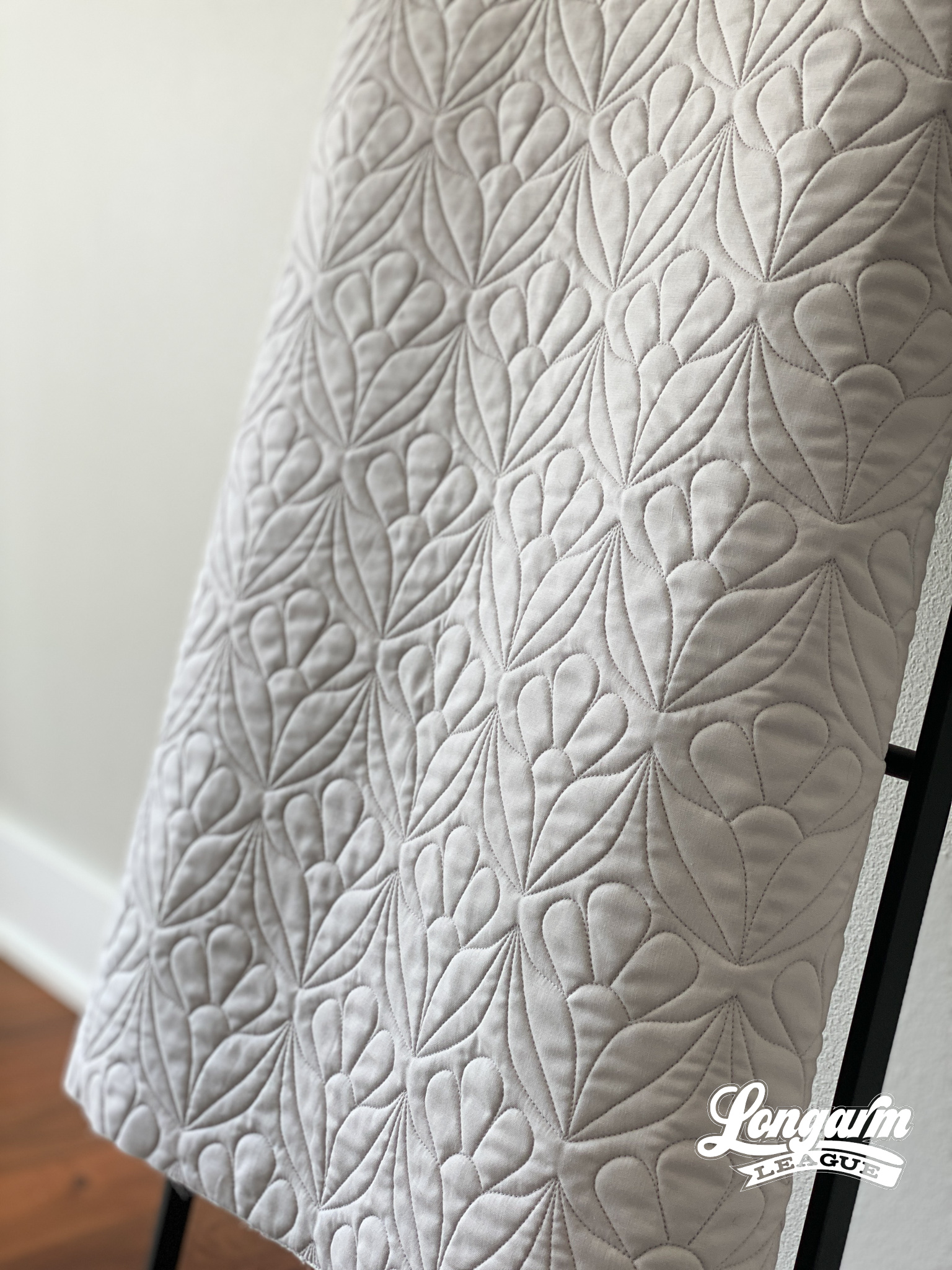
This sample quilt size is approximately 45" x 50". For reference in scaling this design, the pictures here show a row height of 3.5". If you include the gaps between the rows, the total pattern height would be 4.167". That would mean t...
What are clients willing to pay for quilting?

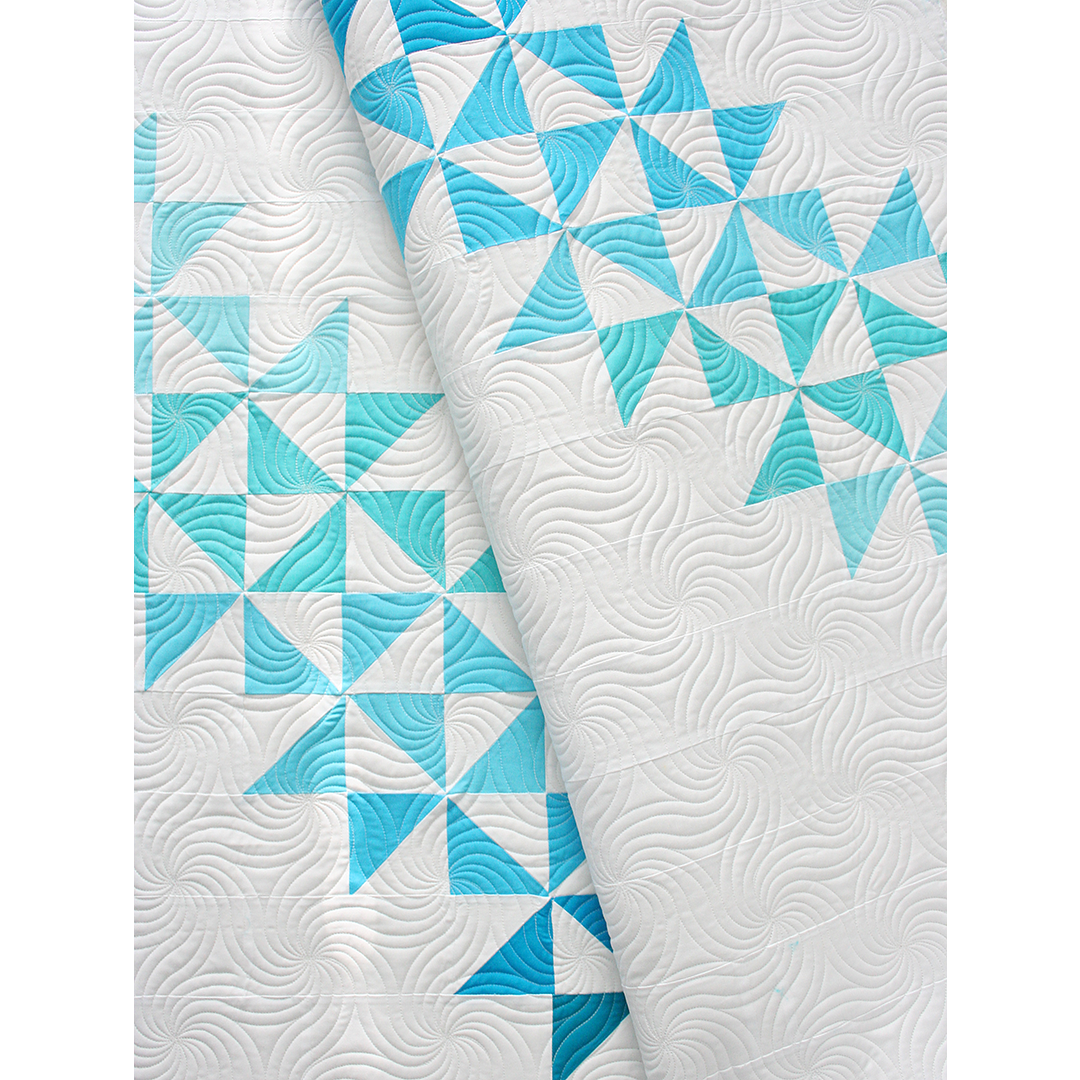
From a longarm quilter's perspective, there can be a lot of fear and anxiety in what to charge clients, especially if you are just starting a business. I was right there, too, especially at the beginning of my journey.
I just looked back at some of my invoices before I got my longarm. I started taking on miscellaneous sewing projects in 2007, and I charged someone $120 for making a twin quilt on my home sewing machine. This project would have required me to buy the fabric, batting, and thread, baste the layers on my kitchen floor with a lot of safety pins, free motion quilt it through the small throat space, trim, make and apply the binding... the whole shebang. A small saving grace is that it was a whole cloth quilt (no extra piecing required) made with solid fabrics (less expensive than some designer prints) with a simple meander requested as the quilting motif. The project cost me probably around $60 in materials (buying retail at the store with no wholesale accounts), which would...
Together Digital Quilting Design
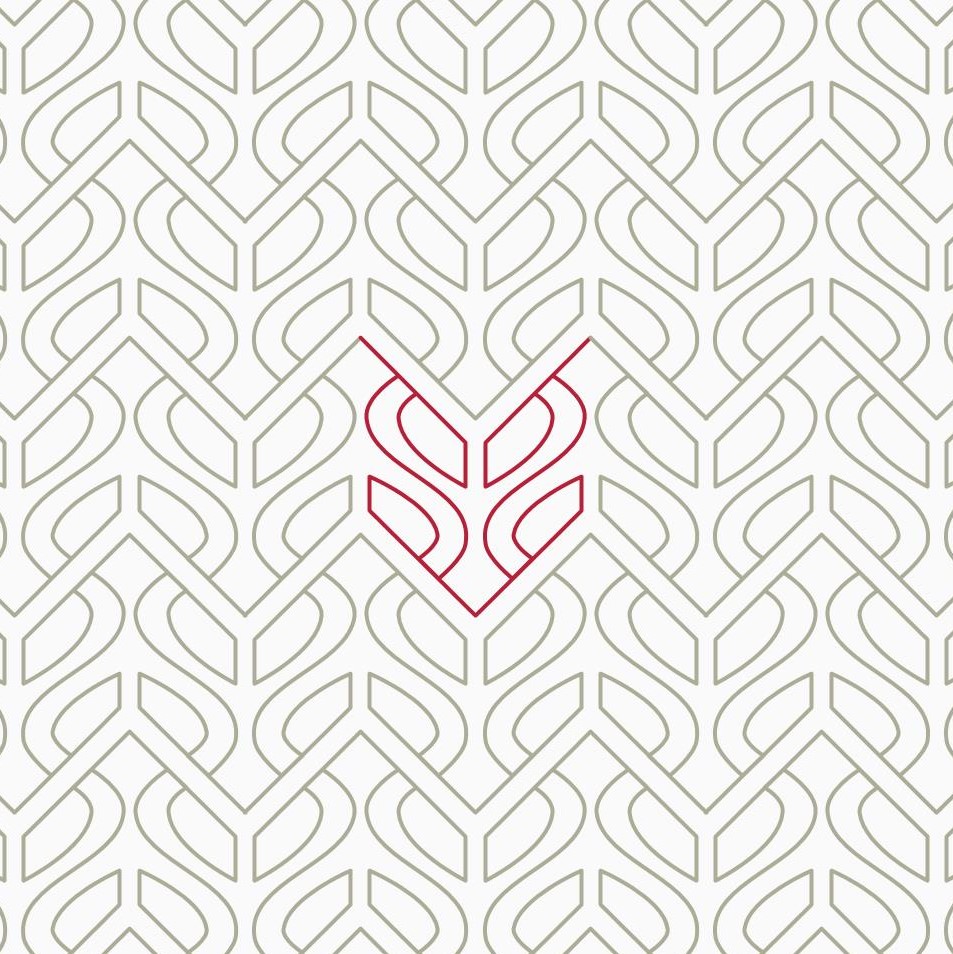
Meet the digital pantograph design released to the Longarm League membership in July of 2021. It's called Together.
I work on a lot of designs—sometimes many at once—and can't always remember what my inspiration or motivation behind them was, but I'm pretty sure this was started after seeing some wallpaper on Pinterest that I really liked. That's not the first time that's happened, either. It turns out wallpaper really gets my creative juices flowin'! When I nested the repeating rows together, I saw the possibility of them appearing to intertwine, and I was really into that idea.
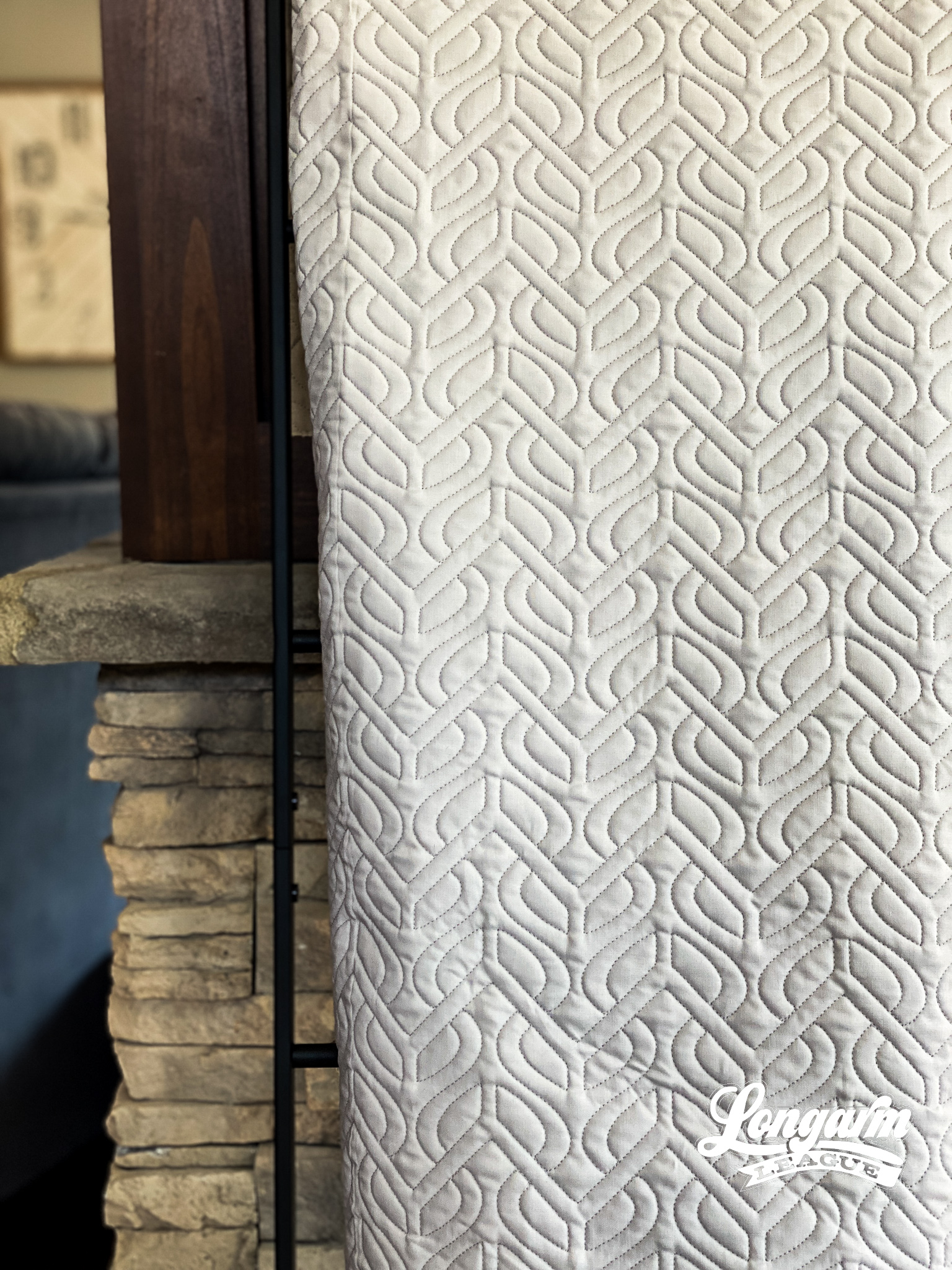
I could see this design working well on a modern quilt top, and/or perhaps one with a lot of negative space - the texture really looks great!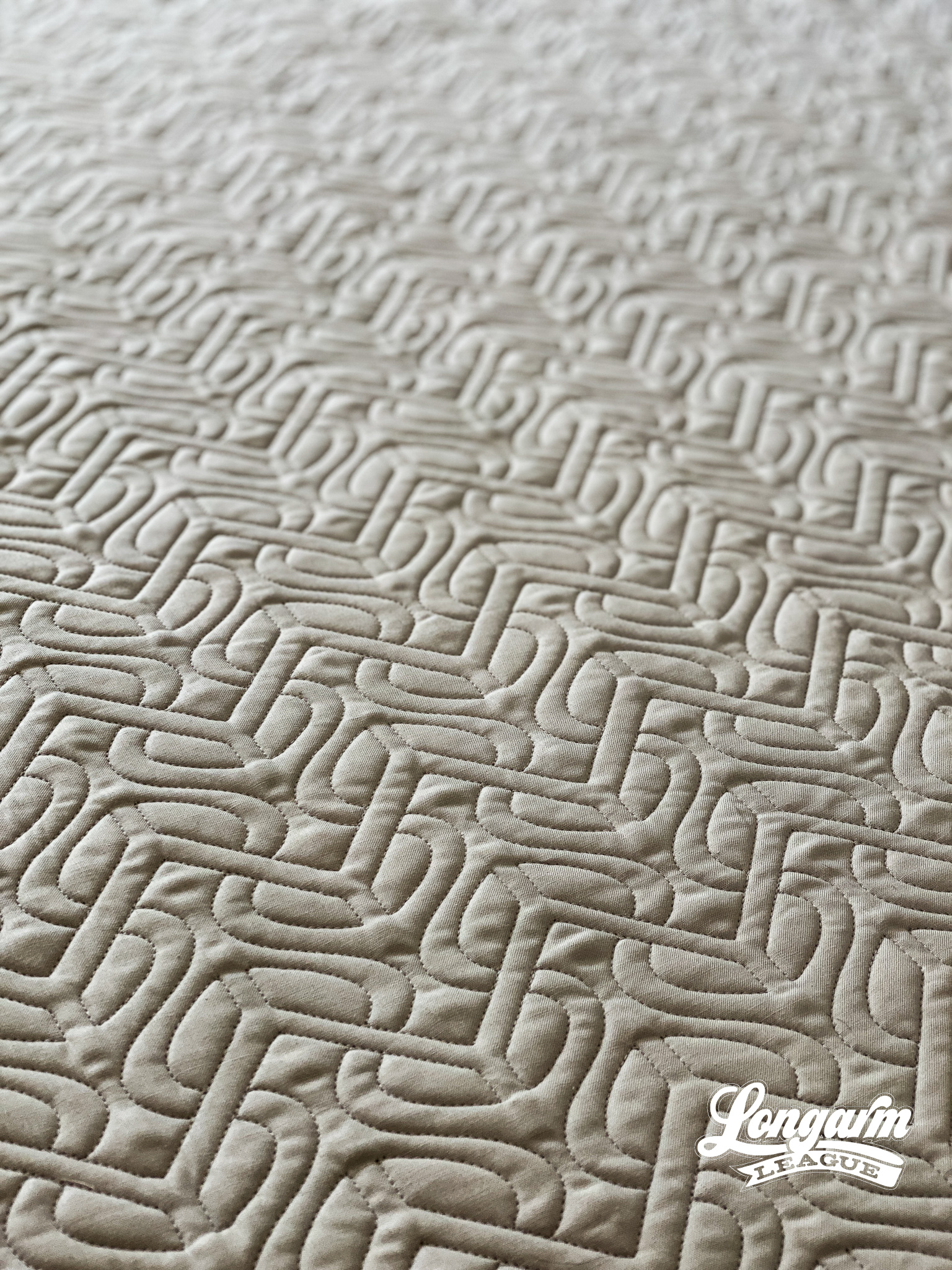
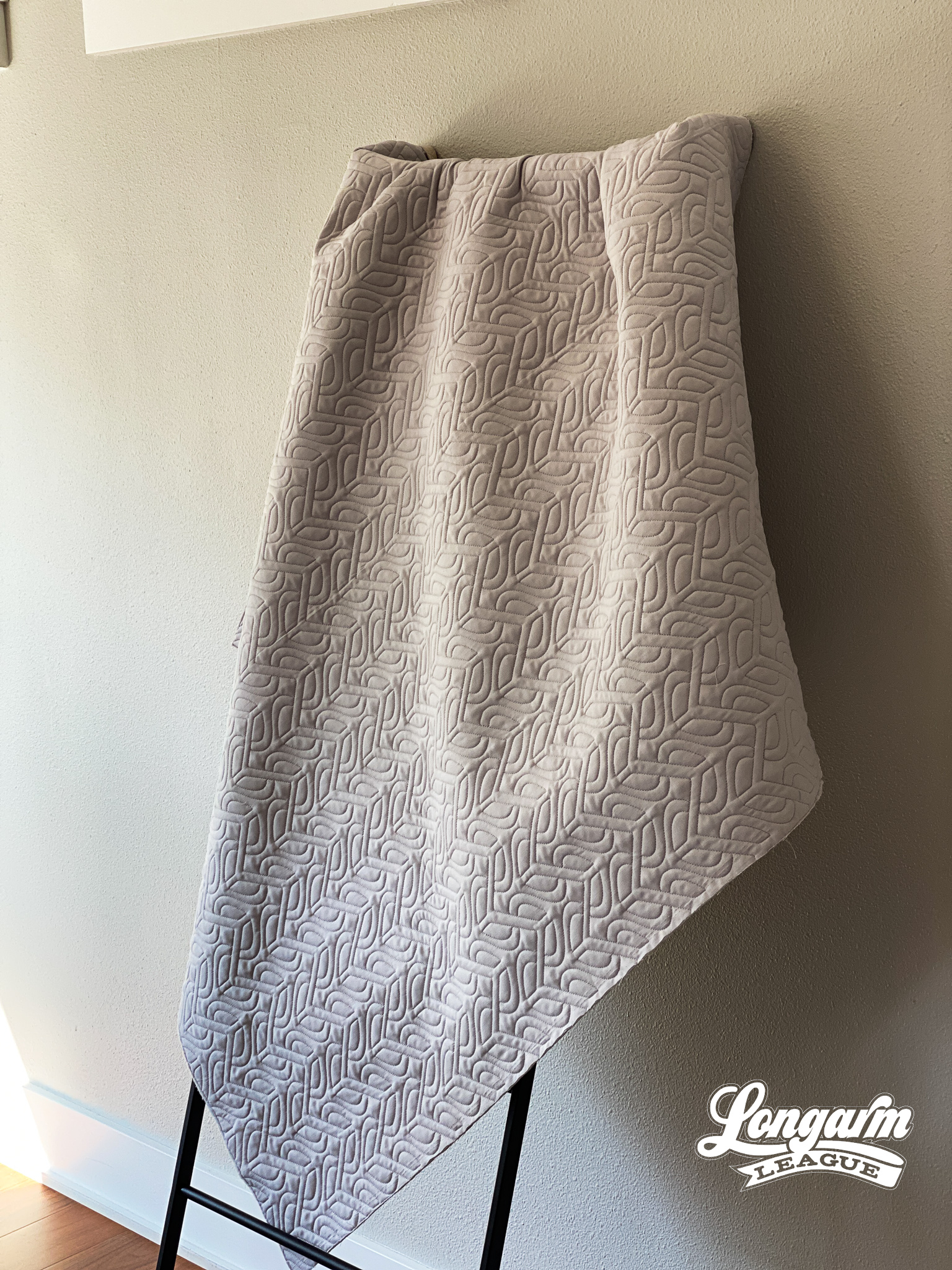
This sample quilt size is approximately 45" x 50". For a reference in scaling the design, the pictures here show a 3.0" row height with a gap between rows of -1.167" which created a pattern height of 4.167".
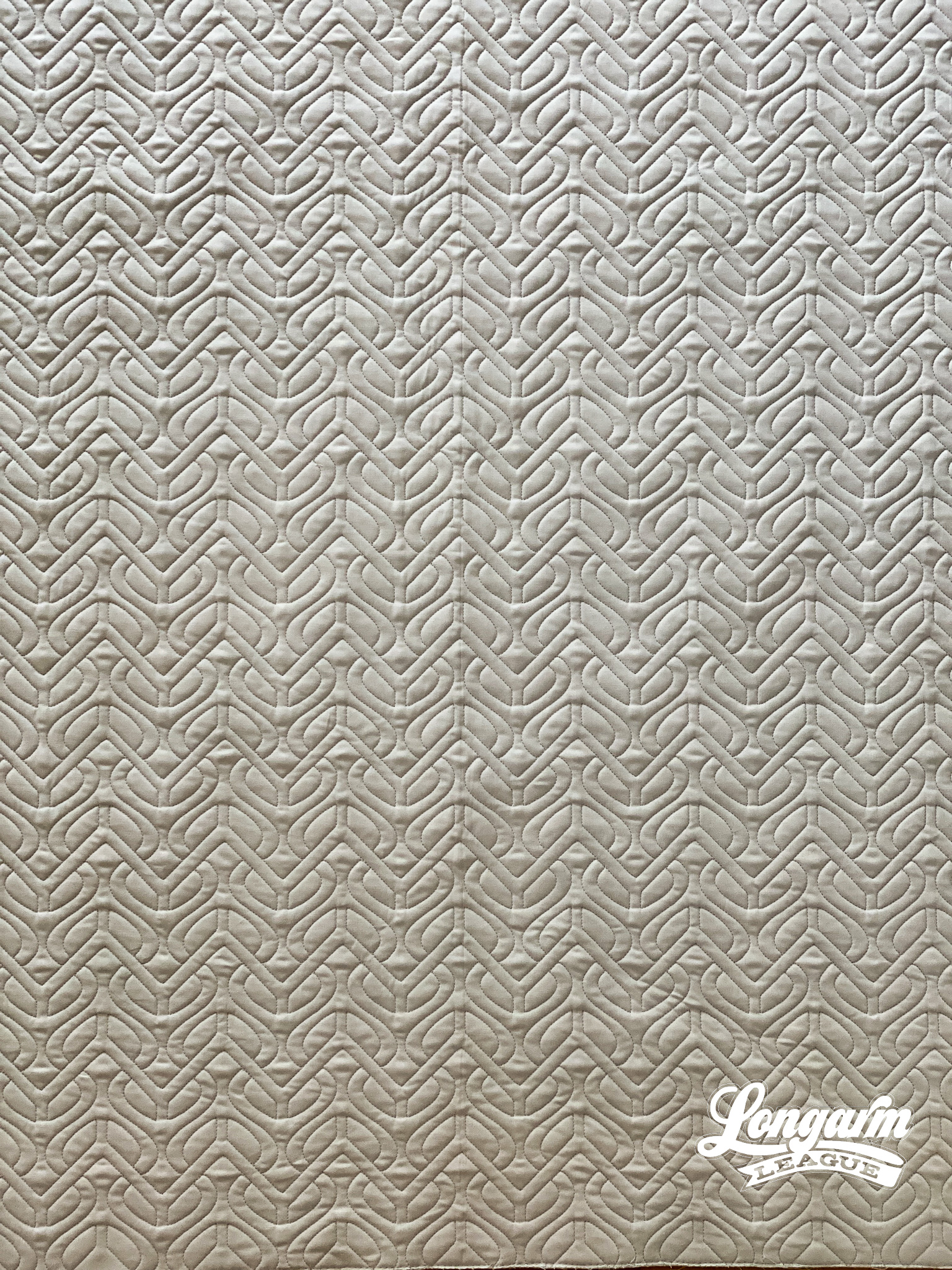
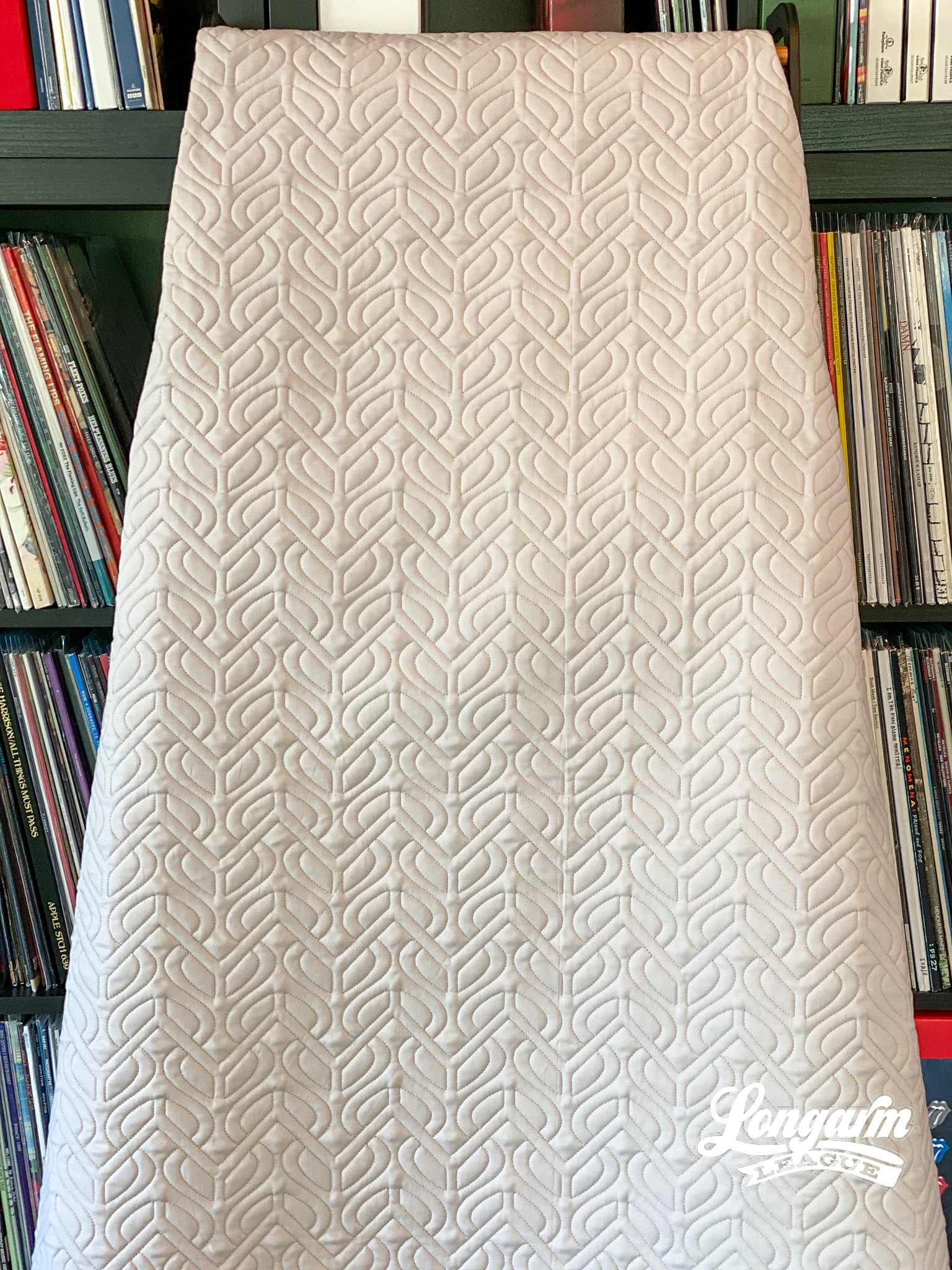
There are some small areas of backsti...
Glancing Digital Quilting Pantograph Design
I get naming fatigue when I'm working on lots of pantograph designs, often at the same time. I like to have practical names so that I can remember essentially what they look like without opening the files, but then those names don't often translate well to the marketplace.
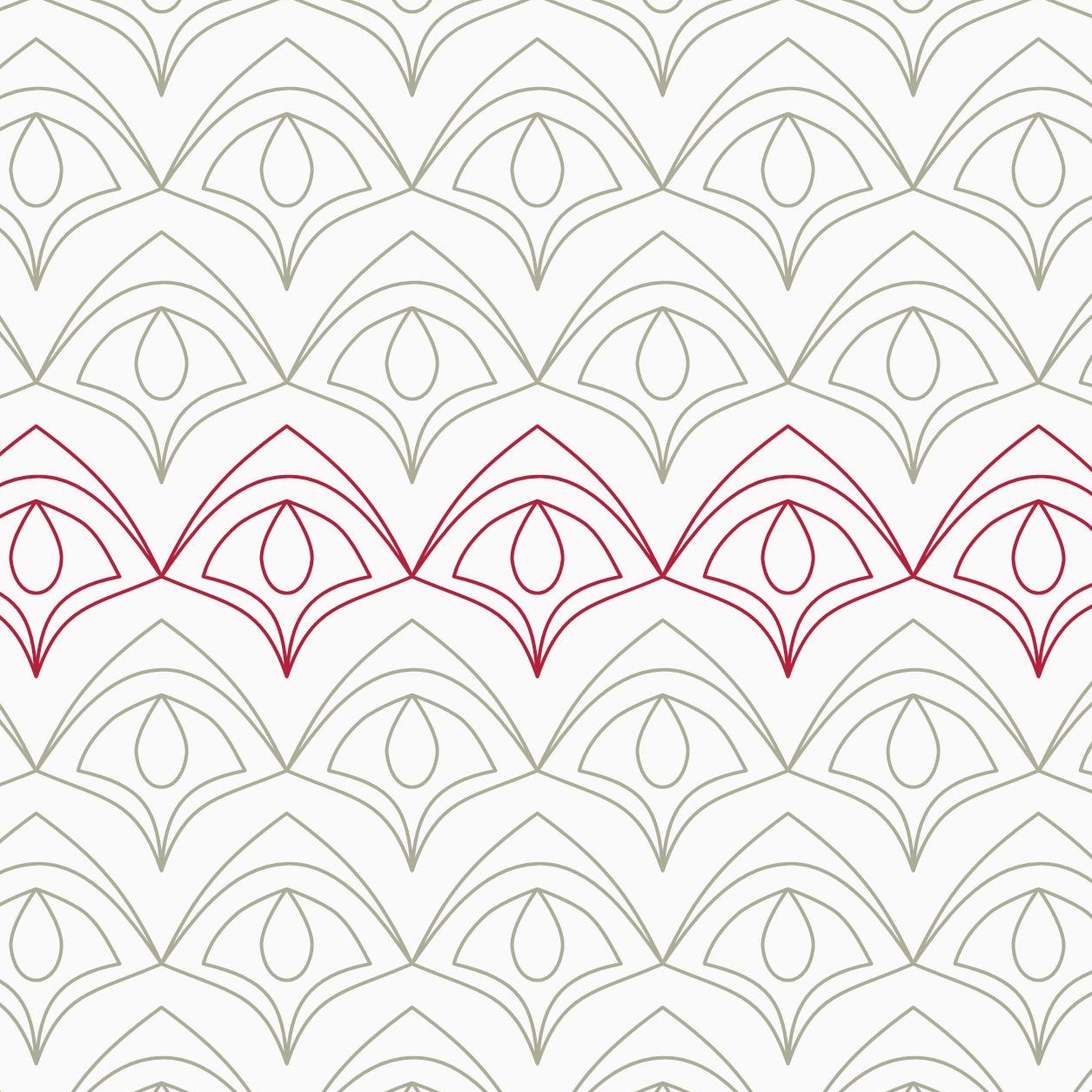
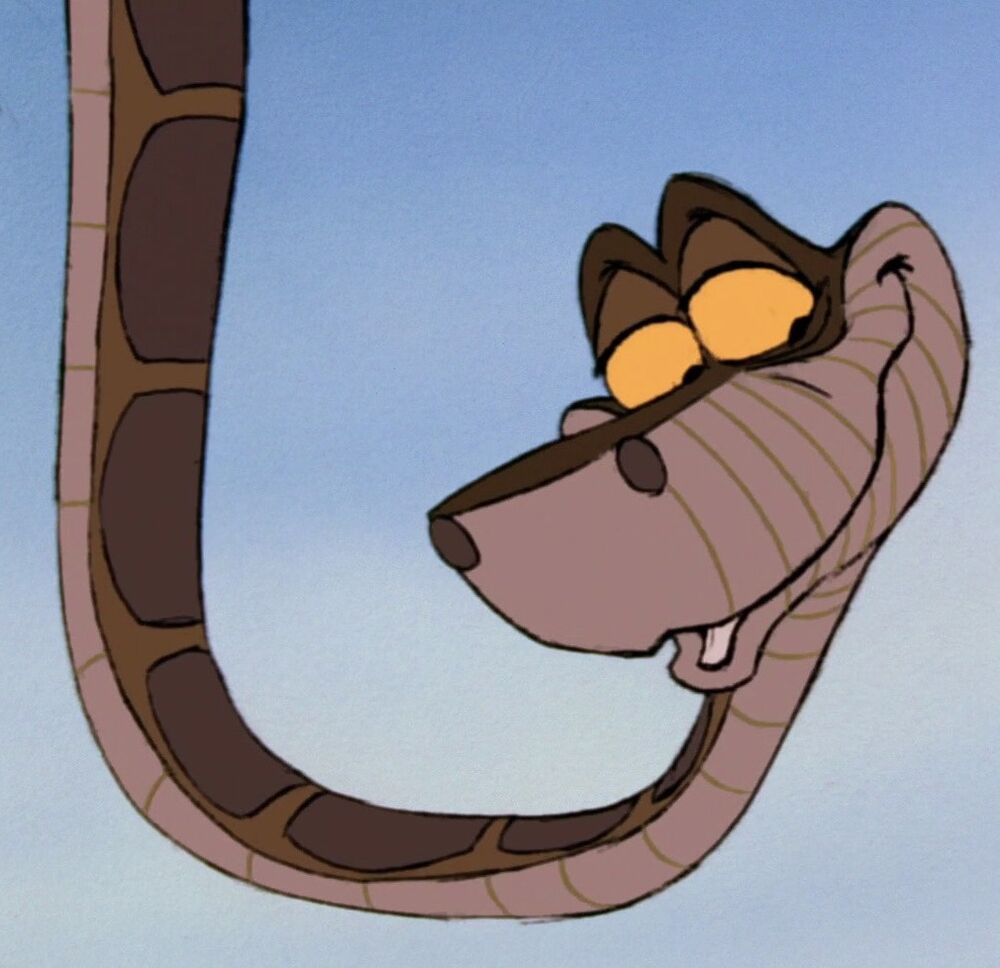
This is one of those designs that I really can't recall what it started out being, but after I saw "snake eyes" I couldn't really see anything else. Longarm League member Lin Miller suggested the name Glancing in our Slack channel and immediately I knew that it was a better title than Snake Eyes. Or maybe I should have cut right to the chase and named it Kaa after the character in Jungle Book. 😁 It wouldn't be the first time a design of mine inadvertently took on the shapes of animated Disney characters.
What I DO remember about this design is that it's easy to stitch out with no backtracking. Huzzah!
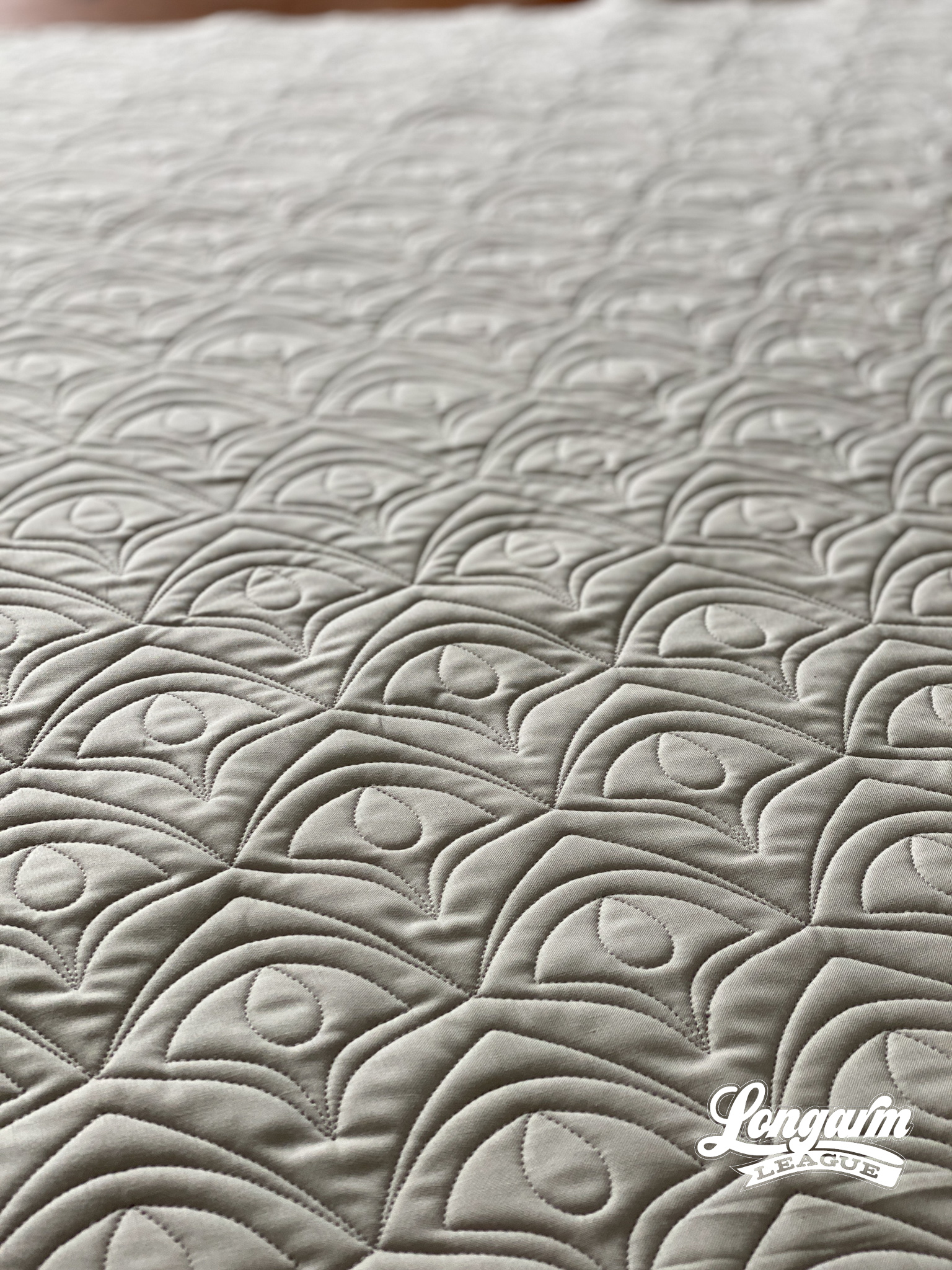
When setting the design up in a computerized system, it does require every other row to be offs...
Behold Digital Pantograph Quilting Design

I was so mesmerized by how this design was stitching out that I didn't realize I'd forgotten to record a snippet of the stitch path until I was on the last row! Oops! The video of the final row stitch-out is available at the top of this post.
What I really like to show in the videos is how any backtracking happens. As a designer, I try not to use backtracking too much, but it's also unavoidable at times. So, yes, there is some backtracking in this design, but it's not too intense. If it helps me accomplish a pretty result? Sign me up! I'm okay with that.
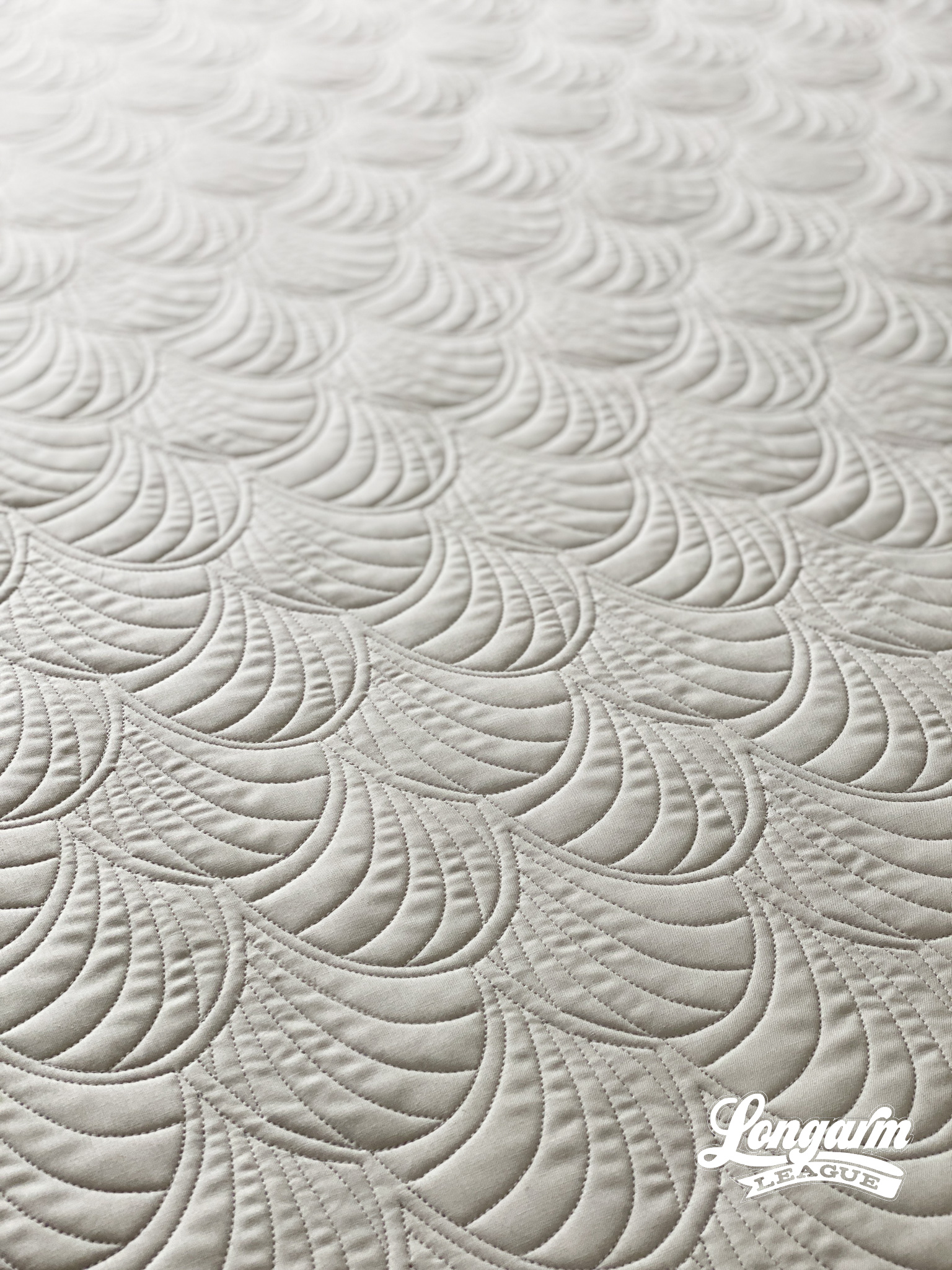
The upside-down clamshells are staggered a bit—one higher than the other on the repeat—so that you can set it up on your computer without offsetting. Once the rows are placed, you'll want to nest the rows closely, but they shouldn't touch. The space between the rows will give a little bit of margin and help hide any inconsistencies during realignment. It needs to be close, but placement does not have to perfectly meet the prior ro...

Jess Zeigler
Longarm League Commish & Owner of Threaded Quilting Studio, LLC.


